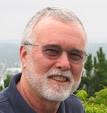
Last evening I attended a meeting of the Mayor's Neighborhood Advisory Commission, MNAC, for short.
It was remarkable that 20 of our 23 neighborhoods were represented!
Each was given an opportunity to comment.
This meeting was an overwhelmingly positive one, despite the expression by some members of their neighborhood's complaints and criticisms.
There has to be a place where complaints are heard, and heard by more than one neighborhood, because no single neighborhood necessarily has exclusive rights to any single problem. But also, because there is strength in numbers! What affects one neighborhood may one day affect all neighborhoods, so it is good that all neighborhoods can share these problems as well as ideas for how to avoid or mitigate them in the future.
Such a process has multiple benefits, and in many social environments -including governments- it is considered as simply 'working smart'.
Why repeat the same learning curve every time a similar problem occurs?
There is a major benefit to identifying shared solutions that frame issues, honestly and in an informed fashion, which can help the process of resolution greatly, regardless of venue.
Not necessarily solve every conceivable problem, mind you, but share commonalities that can also be used to set policy guidelines for the future.
------------------
One of the serious concerns expressed at the MNAC meeting came from the Whatcom Falls Neighborhood Representative, who was understandably frustrated that the decision described below did not go the way he, and some other neighbors, wanted.
That brings me to the WIndy article and particularly, the Inside the Indy piece which appeared in today's edition.
I understand the concerns and the opinions expressed, but disagree with the conclusions.
These writings focused on the City Council's 4-3 decision last Monday to allow a 'rezone' that some maintained was a precedent that did not follow the Comprehensve Plan.
That view is inaccurate in my opinion.
But, taking the specific to the general case, the WIndy also opined that this might be a 'harbinger, [that] proposals that tout densification and reduction of sprawl will trump any concerns over neighborhood character.'
I strongly disagree, and here's why:
First, the rezone in question is a 'contract rezone', a rare occurrence that may happen once or twice a year.
What distinguishes this type of rezone from the others is that it is considered a 'quasi-judicial' matter rather than a legislative matter.
For the uninitiated, this means a technical loophole that allows alternate proposals, but only if the applicant can demonstrate public benefit by each of 7 specific criteria.
Such decisions are mandated to be made by the City Council after review by the Planning Commission and professional staff.
The Planning Commission was unable to muster 4 votes for any specific set of recommendations, so essentially that body served mainly as a conduit for information and public comment to the Council, which then had the duty to decide the issue, based on the closed record to that point.
This is one of those times that the Council has to act essentially as a jury, and decide the case on the facts already in evidence.
That is inherently an uncomfortable and controversial decision for anyone to have to make, but it is the Council's duty to do it and no one else's.
As Harry Truman said 'the buck stops here'. He also said 'if you can't stand the heat, get out of the kitchen'.
Now, let me say that the 7 criteria to be used as tests are good ones, but not entirely objective. Otherwise, the 'jury' would not be needed!
But, they are not simple criteria; they are subject to interpretation by each Council member.
My own view is that Council members represent the entire community, not individual Wards, Neighborhoods or special interests.
With that in mind, we are charged with the responsibility of applying all of the Comprehensive Plan goals to an issue, and not just those that support a particular point of view.
Folks, that ain't easy!
The Comp Plan means many different things to many different people, but all have to be kept in some sort of balance for it to work for everyone, plus honor the codes and laws that apply [whether folks are aware of them or not].
With all the above in mind, predictably, the Council decision reflected diverse views, with the resulting decision favoring accepting the contract rezone proposed.
That should be OK, because our rules require nothing more than a simple majority.
Unfortunately, this system does seem to produce 'winners and losers'.
Without trying to justify my vote, here's what I saw clearly as the advantages of the decision that was made:
1. A previous application that was vested [means old rules apply] proposed 26 new homes on 10,000 sf lots, although an adjacent area had already been rezoned for the same smaller building footprints requested in the contract rezone, setting a precedent that was difficult to dismiss in these deliberations.
Under that proposal, each lot was required to have a minimum 30' frontage on the to-be-constructed Whitworth Blvd.
[The underlying zoning actually suggests that up to 52-54 lots were potentially allowable]
The contract rezone requested 41 new homes [added to 3 existing] on smaller building footprints and using shared driveways for access, which removes impervious surface area.
Basically this amounts to a clustering concept that is generally not a bad way of efficiently using the land available without unduly impacting the environment, especially in an urban area.
2. The previous application would have provided 50' buffers for Cemetery Creek, a tributary of Whatcom Creek.
The contract rezone provides for 200' buffers, plus over 4 acres of Open Space preserved as wetlands and uncut trees, plus a treed buffer.
3. The previous application did not specifically provide for traffic mitigation on substandard Xenia Street, or to roadways to the North that connect with Old Lakeway Drive, a problematic cut-thru connecting Lakeway and Yew Street.
The contract rezone did specifically provide for traffic calming measures on Xenia Street.
Bottom Line: 15 additional homes; better protection for Cemetery Creek, including trail corridor to help connecting Lakeway with Samish Crest trails to Padden Creek; 4+ acres of added open space; treed buffers; traffic mitigation for Xenia Street and connections to the North.
Now, I ask you, which is the better deal for the City of Bellingham?
I would personally hate to be on any 'winning side' that actually resulted in a markedly inferior development! That would be a case of winning a battle, but losing the war. That kind of thinking has already characterized too much of our history.
-----------------------------
That's enough for one blog I've been told, so maybe there will be more later on this subject.
One last thought:
Our single main challenge is to manage growth and change well, so as to sustain our quality of life.
That is a citywide mission of which Neighborhoods are a very important part!
Thursday, September 13, 2007
Wednesday, September 12, 2007
Reconveyance Feedback
For the second time since beginning this blog, something I have said has elicited a remarkable response.
I am hopeful this will lead to something beneficial to our community, and its efforts to permanently protect Lake Whatcom.
While I don't have sufficient new information now to report on any new facts or insights, this will likely be forthcoming in the next few days.
One thing I want to make crystal clear is that my postings on this subject are not to create sensationalism, but to inform and question. Pertinent questions do need be asked to inform good decisions, and it has been my habit to engage in that practice. Questions have been asked and I trust the answers will be forthcoming, which I will report later.
Likely, my next post will be on a different subject.
I am hopeful this will lead to something beneficial to our community, and its efforts to permanently protect Lake Whatcom.
While I don't have sufficient new information now to report on any new facts or insights, this will likely be forthcoming in the next few days.
One thing I want to make crystal clear is that my postings on this subject are not to create sensationalism, but to inform and question. Pertinent questions do need be asked to inform good decisions, and it has been my habit to engage in that practice. Questions have been asked and I trust the answers will be forthcoming, which I will report later.
Likely, my next post will be on a different subject.


Tuesday, September 11, 2007
Lake Whatcom: An October Surprise?
Lake Whatcom: An October Surprise?
A number of people, including me, have heard Pete Kremen drop a few hints about his idea of a 'reconveyance' of forest properties to ostensibly protect Lake Whatcom. Not many details, mind you, just enough to titillate.
What is Pete really up to? I mean really?
Sounds like a grand scheme that might make him -and maybe others- seem a hero, doesn't it?
Think we might be hearing more about this anytime soon, say maybe next month?
Think certain candidates might benefit from such an October surprise?
Hmmm.
Details are sketchy, but here are some details on the background involving the Department of Natural Resources [DNR], plus a few questions that may help outline the rationale, and maybe even the form such a reconveyance 'surprise' might take.
--------------
DNR owns almost 15,000 acres of forest lands in the Lake Whatcom Watershed, about 47% of the total.
That's a big chunk which is already publicly owned by a State Agency.
But, DNR needs to 'harvest' its lands regularly to return monies to schools and other entities through trusts, by law.
But, harvesting timber in this watershed has become particularly problematic and difficult for DNR with the increased public concerns over protecting our water supply, which happens to be Lake Whatcom.
Not too long ago, our State Legislature accomplished a rare feat, that of agreeing -unanimously- on a measure.
It simply required DNR to establish more stringent Forest Practices for any harvesting done in the Lake Whatcom Watershed.
That bill, sponsored by our Senator Harriet Spanel, gained the support of every member of our legislature at the time, and launched what turned out to be a 3-plus years of deliberation by a stakeholders committee to produce what was termed the Lake Whatcom Landscape Plan.
During this entire time the DNR, under the direction of Commissioner of Public Lands, Doug Sutherland, continuously stalled and tried to frustrate this legislatively directed process.
As this discussion proceeded, it was apparent that DNR didn't want to make any substantial changes, which the agency saw would make its job of returning funds to schools even more difficult than it had become.
The process finally concluded with 4 or 5 'alternate scenarios', from which one was to be selected.
That's when things began to get interesting!
It seems that private forestry owners had been left out of the Landscape Committee deliberations and were frustrated, mad and fearful about what results might be adopted.
They didn't want more stringent rules for DNR because if that happened, they might be next in line for stronger rules.
DNR fueled these fears by its own suspiscion that if a precedent were set for Lake Whatcom, that might spread state-wide, causing them more headaches in meeting their commitment to return funds to public trusts.
Unspoken, was the reality that many private 'foresters' did not plan on remaining true to that label.
They used that cover as a tax advantage until they could get County rezones for development.
Hey, why not convert land valued at a few thousand dollars per acre to lots valued at hundreds of thousands?
After all, the County has been doing that, in concert with Water Districts, for years!
Anyway, the private forestry owners got their turn to review and comment on the Landscape Plan at the end, because Pete Kremen thought they ought to.
The vehicle for this to occur was the Forestry Forum, chaired by County Council member Ward Nelson, who also happens to live in the watershed.
I also served on this committee at the time -along with several others, including Lois Garlick- as the City Council representative.
Long story short, Ward had a technique he had learned about as an Army officer, of using a series of 'pair-wise' comparisons to gain input, from different people with different perspectives, on how to decide which of several choices was better.
I encouraged him to use it and offered to help.
One afternoon, using a computer & projector in the Library Lecture Room, we held a Forestry Forum meeting in which each member was asked to rate the same series of choices that were shown on a big wall screen.
You know, would you prefer this, versus that.
After about 3 hours of discussion, voting and recording the results in special computer software, Ward pushed a button and the results were quickly calculated and flashed on the screen.
They had chosen an Alternate even more stringent than the one put forward by the Landscape Commtitee as 'preferred'!
It felt like all the air went out of the room!
After the results had sunk in and the Forestry Forum folks realized what they had done, their reaction was swift and angry.
Oh no, that's not what we want!
We want the least restrictive one; the one DNR had started with!
None of the more restrictive alternates were acceptable.
End of meeting.
It could have been a prime example of people saying something that seemed politically correct, but really wanting something very different.
A Psychology researcher would have had a field day!
This was a clear case of the group's majority deciding to follow a 'predetermined path to a foregone conclusion', despite what turned out to be a charade of systematically choosing between seemingly simple options.
But, the latter results stood as the strong preference for the majority of the group, so that was that.
And, the Forestry Forum's recommendation was only supposed to be 'advisory' anyway, but was it?
Later, when Pete later asked me, in Ward's absence, to simply summarize these results, I really couldn't do it with a simple yes or no, could I?
-------
Ultimately, DNR did accept the 'Preferred Alternate' as proposed from the Landscape Committee, but it also pulled rank on the County by naming only it's staunch forestry supporters to the oversight committee, instead of the people who were recommended.
That may be how it stands to this day. An exercise in near futility, with a State agency thumbing its nose at the State Legislature and the folks who worked so hard to put into effect more stringent timber harvesting rules in our water supply watershed.
Sad, but true.
It seemed to me at the time, as it still does now, that if DNR was mostly concerned with loss of expected revenues, that could be resolved fairly simply.
Here's how: DNR retains ownership of its lands, estimates its average annual revenues, and proposes that the County and/or City come up with that funding instead of relying on DNR harvests.
That would definitely cut down on the periodic mass-wasting impacts, including slides and muddy run-off, plus grow more mature trees.
I think the number was about $250,000 per year that DNR was counting on.
Paying DNR that amount annually might be doable immediately, at least until another funding method is identified.
Maybe, the City could agree to provide some of these funds from its watershed acquisition surcharge, providing the County did the same from Conservation Futures funds or other source.
Of course later, selective harvesting by DNR might be carefully undertaken to provide some portion of its necessary revenues. But, this would need to be done by some version of the more restrictive rules advocated by the Landscape Committee.
This type of watershed usage -selective harvesting of mature timber- is exactly what was recommended by Dr Richard Horner, a renowned expert in watershed protection!
See how simple this exercise can be?
The above concept is pretty simple, but Pete does seem to have a grander scheme in mind.
If the plan is to shift ownership to the County, what does that help?
Ahhh, that's the stuff heroes are born to do!
------
Who else owns forest lands in -or near- the watershed?
Well, Trillium does for one, about 2400 acres on Galbraith Mountain that were proposed for rezone, maybe more somewhere else?
Then, there were those folks who made up the Forestry Forum.
Maybe a few relatively 'new' owners of watershed property, too.
How about that Iverson guy who snapped up the 125 acres under the power line the City wanted to acquire?
Isn't that the key link that allows access for a water line to Squalicum Mountain, where all that controversial development is going on?
Hmm.
Wonder if any of these forest lands are part of a reconveyance scheme?
If they are, what property -or persuasive power- does the County have that could possibly interest them in a trade?
Is the County's plan to make a large part of the watershed a recreation area?
Lisa McShane's posts through a Lake Whatcom listserv certainly says that is the plan!
Does she know something the rest of us don't know?
Hasn't the County Parks Director been given the assignment of putting together some schemes and proposals?
What form would such recreation uses take?
Active or passive uses?
Motorized vehicles -either watercraft or land-based?
What about access roads?
What about trails?
How will any recreation scheme be administered?
Who will enforce the rules?
At whose cost?
By what funding mechanism?
See how complicated this scheme can become?
Maybe expensive, too!
-------
Which lands outside the watershed are under consideration for either reconveyance or rezoning as compensation?
What would be their intended use?
Are future zoning changes being considered?
Is there a plan to keep forestry as the primary use of these lands?
Can we trust the County to keep forest lands dedicated to forestry?
Is Doug Sutherland really a long time buddy of David Syre?
--------
I'm sure these questions will be answered in due time, but shouldn't they be answered in advance, rather than after the fact?
Will we be asked to reconsider rezoning forest lands for development to pay for protecting our watershed?
Who's likely to get rich over this?
Just a few questions for Pete and the other would-be instant heroes to answer - preferably before October.
Surprise!
A number of people, including me, have heard Pete Kremen drop a few hints about his idea of a 'reconveyance' of forest properties to ostensibly protect Lake Whatcom. Not many details, mind you, just enough to titillate.
What is Pete really up to? I mean really?
Sounds like a grand scheme that might make him -and maybe others- seem a hero, doesn't it?
Think we might be hearing more about this anytime soon, say maybe next month?
Think certain candidates might benefit from such an October surprise?
Hmmm.
Details are sketchy, but here are some details on the background involving the Department of Natural Resources [DNR], plus a few questions that may help outline the rationale, and maybe even the form such a reconveyance 'surprise' might take.
--------------
DNR owns almost 15,000 acres of forest lands in the Lake Whatcom Watershed, about 47% of the total.
That's a big chunk which is already publicly owned by a State Agency.
But, DNR needs to 'harvest' its lands regularly to return monies to schools and other entities through trusts, by law.
But, harvesting timber in this watershed has become particularly problematic and difficult for DNR with the increased public concerns over protecting our water supply, which happens to be Lake Whatcom.
Not too long ago, our State Legislature accomplished a rare feat, that of agreeing -unanimously- on a measure.
It simply required DNR to establish more stringent Forest Practices for any harvesting done in the Lake Whatcom Watershed.
That bill, sponsored by our Senator Harriet Spanel, gained the support of every member of our legislature at the time, and launched what turned out to be a 3-plus years of deliberation by a stakeholders committee to produce what was termed the Lake Whatcom Landscape Plan.
During this entire time the DNR, under the direction of Commissioner of Public Lands, Doug Sutherland, continuously stalled and tried to frustrate this legislatively directed process.
As this discussion proceeded, it was apparent that DNR didn't want to make any substantial changes, which the agency saw would make its job of returning funds to schools even more difficult than it had become.
The process finally concluded with 4 or 5 'alternate scenarios', from which one was to be selected.
That's when things began to get interesting!
It seems that private forestry owners had been left out of the Landscape Committee deliberations and were frustrated, mad and fearful about what results might be adopted.
They didn't want more stringent rules for DNR because if that happened, they might be next in line for stronger rules.
DNR fueled these fears by its own suspiscion that if a precedent were set for Lake Whatcom, that might spread state-wide, causing them more headaches in meeting their commitment to return funds to public trusts.
Unspoken, was the reality that many private 'foresters' did not plan on remaining true to that label.
They used that cover as a tax advantage until they could get County rezones for development.
Hey, why not convert land valued at a few thousand dollars per acre to lots valued at hundreds of thousands?
After all, the County has been doing that, in concert with Water Districts, for years!
Anyway, the private forestry owners got their turn to review and comment on the Landscape Plan at the end, because Pete Kremen thought they ought to.
The vehicle for this to occur was the Forestry Forum, chaired by County Council member Ward Nelson, who also happens to live in the watershed.
I also served on this committee at the time -along with several others, including Lois Garlick- as the City Council representative.
Long story short, Ward had a technique he had learned about as an Army officer, of using a series of 'pair-wise' comparisons to gain input, from different people with different perspectives, on how to decide which of several choices was better.
I encouraged him to use it and offered to help.
One afternoon, using a computer & projector in the Library Lecture Room, we held a Forestry Forum meeting in which each member was asked to rate the same series of choices that were shown on a big wall screen.
You know, would you prefer this, versus that.
After about 3 hours of discussion, voting and recording the results in special computer software, Ward pushed a button and the results were quickly calculated and flashed on the screen.
They had chosen an Alternate even more stringent than the one put forward by the Landscape Commtitee as 'preferred'!
It felt like all the air went out of the room!
After the results had sunk in and the Forestry Forum folks realized what they had done, their reaction was swift and angry.
Oh no, that's not what we want!
We want the least restrictive one; the one DNR had started with!
None of the more restrictive alternates were acceptable.
End of meeting.
It could have been a prime example of people saying something that seemed politically correct, but really wanting something very different.
A Psychology researcher would have had a field day!
This was a clear case of the group's majority deciding to follow a 'predetermined path to a foregone conclusion', despite what turned out to be a charade of systematically choosing between seemingly simple options.
But, the latter results stood as the strong preference for the majority of the group, so that was that.
And, the Forestry Forum's recommendation was only supposed to be 'advisory' anyway, but was it?
Later, when Pete later asked me, in Ward's absence, to simply summarize these results, I really couldn't do it with a simple yes or no, could I?
-------
Ultimately, DNR did accept the 'Preferred Alternate' as proposed from the Landscape Committee, but it also pulled rank on the County by naming only it's staunch forestry supporters to the oversight committee, instead of the people who were recommended.
That may be how it stands to this day. An exercise in near futility, with a State agency thumbing its nose at the State Legislature and the folks who worked so hard to put into effect more stringent timber harvesting rules in our water supply watershed.
Sad, but true.
It seemed to me at the time, as it still does now, that if DNR was mostly concerned with loss of expected revenues, that could be resolved fairly simply.
Here's how: DNR retains ownership of its lands, estimates its average annual revenues, and proposes that the County and/or City come up with that funding instead of relying on DNR harvests.
That would definitely cut down on the periodic mass-wasting impacts, including slides and muddy run-off, plus grow more mature trees.
I think the number was about $250,000 per year that DNR was counting on.
Paying DNR that amount annually might be doable immediately, at least until another funding method is identified.
Maybe, the City could agree to provide some of these funds from its watershed acquisition surcharge, providing the County did the same from Conservation Futures funds or other source.
Of course later, selective harvesting by DNR might be carefully undertaken to provide some portion of its necessary revenues. But, this would need to be done by some version of the more restrictive rules advocated by the Landscape Committee.
This type of watershed usage -selective harvesting of mature timber- is exactly what was recommended by Dr Richard Horner, a renowned expert in watershed protection!
See how simple this exercise can be?
The above concept is pretty simple, but Pete does seem to have a grander scheme in mind.
If the plan is to shift ownership to the County, what does that help?
Ahhh, that's the stuff heroes are born to do!
------
Who else owns forest lands in -or near- the watershed?
Well, Trillium does for one, about 2400 acres on Galbraith Mountain that were proposed for rezone, maybe more somewhere else?
Then, there were those folks who made up the Forestry Forum.
Maybe a few relatively 'new' owners of watershed property, too.
How about that Iverson guy who snapped up the 125 acres under the power line the City wanted to acquire?
Isn't that the key link that allows access for a water line to Squalicum Mountain, where all that controversial development is going on?
Hmm.
Wonder if any of these forest lands are part of a reconveyance scheme?
If they are, what property -or persuasive power- does the County have that could possibly interest them in a trade?
Is the County's plan to make a large part of the watershed a recreation area?
Lisa McShane's posts through a Lake Whatcom listserv certainly says that is the plan!
Does she know something the rest of us don't know?
Hasn't the County Parks Director been given the assignment of putting together some schemes and proposals?
What form would such recreation uses take?
Active or passive uses?
Motorized vehicles -either watercraft or land-based?
What about access roads?
What about trails?
How will any recreation scheme be administered?
Who will enforce the rules?
At whose cost?
By what funding mechanism?
See how complicated this scheme can become?
Maybe expensive, too!
-------
Which lands outside the watershed are under consideration for either reconveyance or rezoning as compensation?
What would be their intended use?
Are future zoning changes being considered?
Is there a plan to keep forestry as the primary use of these lands?
Can we trust the County to keep forest lands dedicated to forestry?
Is Doug Sutherland really a long time buddy of David Syre?
--------
I'm sure these questions will be answered in due time, but shouldn't they be answered in advance, rather than after the fact?
Will we be asked to reconsider rezoning forest lands for development to pay for protecting our watershed?
Who's likely to get rich over this?
Just a few questions for Pete and the other would-be instant heroes to answer - preferably before October.
Surprise!
Monday, September 10, 2007
Mayoral Elections: I Like Pike!
Tonight, I'm taking a little breather - but not a big one!
On August 23, I indicated that Dan Pike is my choice for our next Mayor.
This posting will confirm that decision, plus give more information, and why I have come to this important decision.
Mayor is our most important job, which means we citizens need to make the best decision possible during the upcoming General Election.
The Mayor manages the entire City Government on a day to day basis -a big job! In addition to managing is the job of leadership, which in many respects is much more difficult.
As Warren Bennis states: "Management is doing things right. Leadership is doing the right thing."
Since 'doing the right thing can mean different things to different people', the Mayor needs the skills to help find effective ways of accomplishing this, and with consistency.
All Department Heads, including Public Works Director, Planning & Community Development Director, Parks & Recreation Director, Police Chief, Fire Chief, Museum Director, Human Resources Director, Information Technology Services Director, Judicial & Support Services Director, are considered 'at will' employees of the Mayor.
This means the Mayor can hire and fire who he/she pleases at any time.
That's what our City Charter says, and until and unless we decide to change it, that is the way these important positions are filled.
In addition, the Mayor gets to appoint the Finance Director, City Attorney and Hearing Examiner, but only with City Council approval. The Library Director is also appointed by the Mayor, but with Library Board approval.
That is a lot of authority vested in one person!
The Mayor also needs to have a good working relationship with the City Council, each member of which is an individually elected public official, also answerable to the public.
Without good rapport with Council, a Mayor will have trouble doing his/her job, because Council has the responsibility for approving the budget and for enacting legislation.
A minimum of four Council votes are necessary for these things to happen.
Five votes from Council are sufficient to force the Mayor to take official action, whether the Mayor agrees with it or not.
With over 850 employees, an overall budget of over $200 million, including a General Fund budget of about $70 million, this person needs to have significant training and management skills!
Of course, these funds are public funds which must be managed according to special rules in the public's best interests.
An ideal mayor also needs to interface effectively with other officials and jurisdictions at all levels to enable making the best decisions and achieving the best results.
Since the mayor represents all citizens, he/she needs to be accessible to all citizens, groups and interests on a continuing basis.
But most of all, the mayor needs to earn the community's trust in order to be effective.
That takes a good communicator, with sensitivity AND a thick skin. A big order for anyone!
I strongly think Dan Pike comes closest to providing these types of leadership and mangement skills.
-------------------------------
Next, because, this election is primarily by mail-in ballot, the timing of campaigns and the return of ballots has changed from has been customary in the past.
Here is information from the Whatcom County Auditor's Official website:
http://www.whatcomcounty.us/auditor/election_division/
For the General Election:
Ballots Mailed to voters .....Wednesday, October 17th [ONLY 5 WEEKS FROM NOW]
Election Day ......Tuesday, November 6th
Election certification .....Tuesday, November 27th
[Our next elected Mayor will take office on this date, not January 1, 2008]
------------------------------
Today, I submitted a letter of endorsement for Dan Pike and it is now posted on his website:
http://pikeformayor.com
Clicking on 'Supporters' gets to the endorsements:
Here are statements by people who endorse Dan Pike for election as the Mayor of Bellingham. Some of them gathered recently to show their combined support for Dan Pike.
From John Watts (& Joan Casey):
---------------------------------------------
I have not known Dan Pike very long, but have made it a point to meet him on several occasions and exchange ideas about issues that our City government faces, which matter greatly to all of us.
Through that process I have come to know Dan Pike pretty well, I think.
That is why I am enthusiastically supporting him now.
Describing Dan comes down to 3 things; training, temperament & truthfulness.
He is first a man of principle, who has prepared himself by formal education and work experience to deal with issues vital to the public good.
With a degree in Planning from WWU's Huxley College, and a Masters in Public Administration from the John F Kennedy School of Government at Harvard, Dan has demonstrated early in life his intention to dedicate himself to public service.
Those are rare, but desirable qualifications in my book.
Since then, his work experience has been valuable both to himself, and to the citizens of Washington.
Dan was markedly successful in managing major [$500 million] transportation projects -in close proximity to the I-5 Corridor- at a time of severe funding restrictions.
Now, Dan holds the position of Transportation Planner with the Skagit County Council of Governments [SCOG], where he is responsible for regional planning, and again has achieved notable success in getting projects approved and completed.
Attesting to this is the enthusiastic endorsement given to Dan by State Senator Mary Margaret Haugen, who is known for her ability to get necessary transportation work done in this state.
Dan came to Bellingham as a student in 1982, developed a love for this place, and is now a family man, who has achieved his goal of finding professional employment near enough Bellingham to live in the Lettered Streets Neighborhood.
Both Joan & I find Dan to be a refreshing new face in our local political arena.
He is someone we can work with, and feel we are heard.
He is someone who is driven by the notion of engaging citizens and making them feel a part of the public process.
His agenda focuses on the right priorities and issues in a positive manner.
He has managed to convey enough of these qualities to people in a short period of time, to emerge from Dark Horse status in the mayor's race to a legitimate front-runner!
In this town, that takes some doing!
But, now the reality is that Dan Pike needs our help to get elected.
He has good support, but not name recognition or the considerable funding enjoyed by his opponent.
We want to help Dan Pike get the support he needs, and soon!
==============================
A Pike for Mayor Campaign Kick-off event will happen on Tuesday, September 18, from 5 to 7 PM at the Bellwether Hotel. All are welcome!
==============================
Additionally, Joan & I will host a Meet Dan Pike event at our house on Thursday, September 27 at 5:30 to 7:30 PM.
Please come, meet Dan, enjoy refreshments, and offer to help the Pike for Mayor Campaign!
On August 23, I indicated that Dan Pike is my choice for our next Mayor.
This posting will confirm that decision, plus give more information, and why I have come to this important decision.
Mayor is our most important job, which means we citizens need to make the best decision possible during the upcoming General Election.
The Mayor manages the entire City Government on a day to day basis -a big job! In addition to managing is the job of leadership, which in many respects is much more difficult.
As Warren Bennis states: "Management is doing things right. Leadership is doing the right thing."
Since 'doing the right thing can mean different things to different people', the Mayor needs the skills to help find effective ways of accomplishing this, and with consistency.
All Department Heads, including Public Works Director, Planning & Community Development Director, Parks & Recreation Director, Police Chief, Fire Chief, Museum Director, Human Resources Director, Information Technology Services Director, Judicial & Support Services Director, are considered 'at will' employees of the Mayor.
This means the Mayor can hire and fire who he/she pleases at any time.
That's what our City Charter says, and until and unless we decide to change it, that is the way these important positions are filled.
In addition, the Mayor gets to appoint the Finance Director, City Attorney and Hearing Examiner, but only with City Council approval. The Library Director is also appointed by the Mayor, but with Library Board approval.
That is a lot of authority vested in one person!
The Mayor also needs to have a good working relationship with the City Council, each member of which is an individually elected public official, also answerable to the public.
Without good rapport with Council, a Mayor will have trouble doing his/her job, because Council has the responsibility for approving the budget and for enacting legislation.
A minimum of four Council votes are necessary for these things to happen.
Five votes from Council are sufficient to force the Mayor to take official action, whether the Mayor agrees with it or not.
With over 850 employees, an overall budget of over $200 million, including a General Fund budget of about $70 million, this person needs to have significant training and management skills!
Of course, these funds are public funds which must be managed according to special rules in the public's best interests.
An ideal mayor also needs to interface effectively with other officials and jurisdictions at all levels to enable making the best decisions and achieving the best results.
Since the mayor represents all citizens, he/she needs to be accessible to all citizens, groups and interests on a continuing basis.
But most of all, the mayor needs to earn the community's trust in order to be effective.
That takes a good communicator, with sensitivity AND a thick skin. A big order for anyone!
I strongly think Dan Pike comes closest to providing these types of leadership and mangement skills.
-------------------------------
Next, because, this election is primarily by mail-in ballot, the timing of campaigns and the return of ballots has changed from has been customary in the past.
Here is information from the Whatcom County Auditor's Official website:
http://www.whatcomcounty.us/auditor/election_division/
For the General Election:
Ballots Mailed to voters .....Wednesday, October 17th [ONLY 5 WEEKS FROM NOW]
Election Day ......Tuesday, November 6th
Election certification .....Tuesday, November 27th
[Our next elected Mayor will take office on this date, not January 1, 2008]
------------------------------
Today, I submitted a letter of endorsement for Dan Pike and it is now posted on his website:
http://pikeformayor.com
Clicking on 'Supporters' gets to the endorsements:
Here are statements by people who endorse Dan Pike for election as the Mayor of Bellingham. Some of them gathered recently to show their combined support for Dan Pike.
From John Watts (& Joan Casey):
---------------------------------------------
I have not known Dan Pike very long, but have made it a point to meet him on several occasions and exchange ideas about issues that our City government faces, which matter greatly to all of us.
Through that process I have come to know Dan Pike pretty well, I think.
That is why I am enthusiastically supporting him now.
Describing Dan comes down to 3 things; training, temperament & truthfulness.
He is first a man of principle, who has prepared himself by formal education and work experience to deal with issues vital to the public good.
With a degree in Planning from WWU's Huxley College, and a Masters in Public Administration from the John F Kennedy School of Government at Harvard, Dan has demonstrated early in life his intention to dedicate himself to public service.
Those are rare, but desirable qualifications in my book.
Since then, his work experience has been valuable both to himself, and to the citizens of Washington.
Dan was markedly successful in managing major [$500 million] transportation projects -in close proximity to the I-5 Corridor- at a time of severe funding restrictions.
Now, Dan holds the position of Transportation Planner with the Skagit County Council of Governments [SCOG], where he is responsible for regional planning, and again has achieved notable success in getting projects approved and completed.
Attesting to this is the enthusiastic endorsement given to Dan by State Senator Mary Margaret Haugen, who is known for her ability to get necessary transportation work done in this state.
Dan came to Bellingham as a student in 1982, developed a love for this place, and is now a family man, who has achieved his goal of finding professional employment near enough Bellingham to live in the Lettered Streets Neighborhood.
Both Joan & I find Dan to be a refreshing new face in our local political arena.
He is someone we can work with, and feel we are heard.
He is someone who is driven by the notion of engaging citizens and making them feel a part of the public process.
His agenda focuses on the right priorities and issues in a positive manner.
He has managed to convey enough of these qualities to people in a short period of time, to emerge from Dark Horse status in the mayor's race to a legitimate front-runner!
In this town, that takes some doing!
But, now the reality is that Dan Pike needs our help to get elected.
He has good support, but not name recognition or the considerable funding enjoyed by his opponent.
We want to help Dan Pike get the support he needs, and soon!
==============================
A Pike for Mayor Campaign Kick-off event will happen on Tuesday, September 18, from 5 to 7 PM at the Bellwether Hotel. All are welcome!
==============================
Additionally, Joan & I will host a Meet Dan Pike event at our house on Thursday, September 27 at 5:30 to 7:30 PM.
Please come, meet Dan, enjoy refreshments, and offer to help the Pike for Mayor Campaign!
Sunday, September 9, 2007
Waterfront Redevelopment: Mother Goose & the Doctors of Spin Revisited -PART 1
I had fun writing the Guest Editorial below -Circa June 2001.
It captured what I was trying to say without naming names.
It targeted those it needed to and left everyone else alone.
The 'buzz' it created was limited to a few observers, who maybe didn't get it all completely themselves either.
Oh, but some did get it!
Those were the ones who felt burned by the piece.
To their questions about who was implicated, the answer was simply 'if you think the shoe fits, by all means try it on'!
Now, it may be time for another iteration of this theme, this time to focus especially on our Waterfront Redevelopment.
That will be the subject of PART 2, to come later.
This time, I will try not be so obtuse that many people won't get it!
Growth Management, Lake Whatcom, Neighborhoods and Leadership also require more scrutiny during this Election Year, but these topics will require more time to develop for publication.
---------------------
Mother Goose & the Doctors of Spin
Some of my fondest memories from childhood were the stories my mother read to me:
• Bible stories with their parables
• Classical books with their allegories, and
• Fairy tales with their morals.
While the details of these stories fade with time, their essential messages linger, because the stories are about life and its inevitable struggles, and contain valuable lessons about how we can live our life in ways that help us overcome its inherent difficulties.
How those days of yesteryear shined!
It seemed a much kinder, gentler time then.
Lately, the healthy stories, which usually promoted a moral principle, are being replaced with some meaner types of tales, with no purpose except to promote a particular point of view.
Modern lingo, almost politely, calls these tales by various names, like "negative campaigning", "spin-doctoring", and "misinformation".
Names I call them, in plain English, are propaganda, innuendo and lies.
Make no mistake about it, these modern "tales" are intentionally designed to fuzz the facts just enough to influence public perception in one direction or another, depending on the mission "du jour" and the scruples of the perpetrators.
Like the football adage "the best defense is a good offense", these new tales simply attack others rather than propose something positive themselves.
A cheap and sometimes effective tactic, this type of tale can be easily recognized and debunked, provided of course, the intended target audience bothers to ask a few good questions, or simply knows better.
Here are a few corrections to recent misinformation reported as fact in this Guest Column space, along with some possible fairy tale connections:
Chicken Little reported "excessive" taxes have been levied, but neglected to mention:
• Bellingham recently received a Friend of the Taxpayer Award from a recognized conservative watchdog, for its fiscal restraint in raising property taxes.
• Moody’s Rating Service recently granted the City an increase in its municipal bond rating, from A1 to Aa3, due to its outstanding record of sound fiscal management.
• The 7.6% property tax, reportedly passed, in response to the cloud of I-695 in 1999, was actually reduced to an amount sufficient to offset inflation.
And from the Wizard of Oz:
• Straw man (no brain) feels the Lake Whatcom Watershed Land Acquisition Ordinance was unnecessary, despite clear trends of degradation and a new DOE 303 (d) listing!
• Tin man (no heart) complained that the Civic Field Complex citizen’s initiative was too expensive, despite the heavy use of these facilities and major maintenance needs!
• Lion (no courage) failed to see the necessity of enacting the Surface & Storm Water Utility fees, needed to comply with Federal & State mandates!
Cinderella’s slipper of truth will never fit her ugly stepsister "Spin-derella", but that doesn’t prevent "Spin-derella" from trying to prevent public information from being disseminated via the city newsletter, in an accurate and timely manner.
The puppet Pinocchio, (whose nose grew every time he told a fib) might have said the City of Bellingham is unfriendly to business, but he failed to mention:
• The U.S. Conference of Mayors recently gave Bellingham national recognition for its support of the Small Business Service Center.
• Bellingham has been named recently as one of the most desirable places to establish a business, due to its talented labor pool and quality of life.
• The City is actively helping G-P with getting NAFTA benefits, training programs and new job placements for its laid-off workers. The city is also assisting G-P with the permitting of new gas turbine generators to enable them to become power independent.
Oh yes, don’t forget the Dog in the Manger; he actually begrudges the kids their new skateboard park!
I suspect that those who have trouble distinguishing gossip from gospel might not know what this column is really about.
Those folks could be part of the problem.
But, to citizens who do understand this message, I hope you will keep the faith and send your own message to those who are trying to substitute something less worthy, for the honesty, civility and good things to which most citizens aspire.
Just tell them you’ve "had enough" of their brand of negativism.
Bellingham is a wonderful place to live. Let’s keep it that way!
======================================
It captured what I was trying to say without naming names.
It targeted those it needed to and left everyone else alone.
The 'buzz' it created was limited to a few observers, who maybe didn't get it all completely themselves either.
Oh, but some did get it!
Those were the ones who felt burned by the piece.
To their questions about who was implicated, the answer was simply 'if you think the shoe fits, by all means try it on'!
Now, it may be time for another iteration of this theme, this time to focus especially on our Waterfront Redevelopment.
That will be the subject of PART 2, to come later.
This time, I will try not be so obtuse that many people won't get it!
Growth Management, Lake Whatcom, Neighborhoods and Leadership also require more scrutiny during this Election Year, but these topics will require more time to develop for publication.
---------------------
Mother Goose & the Doctors of Spin
Some of my fondest memories from childhood were the stories my mother read to me:
• Bible stories with their parables
• Classical books with their allegories, and
• Fairy tales with their morals.
While the details of these stories fade with time, their essential messages linger, because the stories are about life and its inevitable struggles, and contain valuable lessons about how we can live our life in ways that help us overcome its inherent difficulties.
How those days of yesteryear shined!
It seemed a much kinder, gentler time then.
Lately, the healthy stories, which usually promoted a moral principle, are being replaced with some meaner types of tales, with no purpose except to promote a particular point of view.
Modern lingo, almost politely, calls these tales by various names, like "negative campaigning", "spin-doctoring", and "misinformation".
Names I call them, in plain English, are propaganda, innuendo and lies.
Make no mistake about it, these modern "tales" are intentionally designed to fuzz the facts just enough to influence public perception in one direction or another, depending on the mission "du jour" and the scruples of the perpetrators.
Like the football adage "the best defense is a good offense", these new tales simply attack others rather than propose something positive themselves.
A cheap and sometimes effective tactic, this type of tale can be easily recognized and debunked, provided of course, the intended target audience bothers to ask a few good questions, or simply knows better.
Here are a few corrections to recent misinformation reported as fact in this Guest Column space, along with some possible fairy tale connections:
Chicken Little reported "excessive" taxes have been levied, but neglected to mention:
• Bellingham recently received a Friend of the Taxpayer Award from a recognized conservative watchdog, for its fiscal restraint in raising property taxes.
• Moody’s Rating Service recently granted the City an increase in its municipal bond rating, from A1 to Aa3, due to its outstanding record of sound fiscal management.
• The 7.6% property tax, reportedly passed, in response to the cloud of I-695 in 1999, was actually reduced to an amount sufficient to offset inflation.
And from the Wizard of Oz:
• Straw man (no brain) feels the Lake Whatcom Watershed Land Acquisition Ordinance was unnecessary, despite clear trends of degradation and a new DOE 303 (d) listing!
• Tin man (no heart) complained that the Civic Field Complex citizen’s initiative was too expensive, despite the heavy use of these facilities and major maintenance needs!
• Lion (no courage) failed to see the necessity of enacting the Surface & Storm Water Utility fees, needed to comply with Federal & State mandates!
Cinderella’s slipper of truth will never fit her ugly stepsister "Spin-derella", but that doesn’t prevent "Spin-derella" from trying to prevent public information from being disseminated via the city newsletter, in an accurate and timely manner.
The puppet Pinocchio, (whose nose grew every time he told a fib) might have said the City of Bellingham is unfriendly to business, but he failed to mention:
• The U.S. Conference of Mayors recently gave Bellingham national recognition for its support of the Small Business Service Center.
• Bellingham has been named recently as one of the most desirable places to establish a business, due to its talented labor pool and quality of life.
• The City is actively helping G-P with getting NAFTA benefits, training programs and new job placements for its laid-off workers. The city is also assisting G-P with the permitting of new gas turbine generators to enable them to become power independent.
Oh yes, don’t forget the Dog in the Manger; he actually begrudges the kids their new skateboard park!
I suspect that those who have trouble distinguishing gossip from gospel might not know what this column is really about.
Those folks could be part of the problem.
But, to citizens who do understand this message, I hope you will keep the faith and send your own message to those who are trying to substitute something less worthy, for the honesty, civility and good things to which most citizens aspire.
Just tell them you’ve "had enough" of their brand of negativism.
Bellingham is a wonderful place to live. Let’s keep it that way!
======================================
Saturday, September 8, 2007
Waterfront Redevelopment: Navigating Charbydis & Scylla
'..leadership is all about making things (good and bad) happen that might not otherwise happen and preventing things from happening that ordinarily would happen.' -Thomas E. Cronin
http://www.whitman.edu/president/cronin/articles/leadership.cfm
--------------------
According to Wikipedia, 'the phrase between Scylla and Charybdis has come to mean being in a state where one is between two dangers and moving away from one will cause you to be in danger from the other'.
The two sides of the Strait of Messina, off the toe of Italy, are literally within an arrow's range of each other, so close that sailors attempting to avoid Charybdis will pass too close to Scylla and vice versa.
Between Scylla and Charybdis is the origin of the phrase "between the rock and the whirlpool" (the rock upon which Scylla dwelt and the whirlpool of Charybdis) and may be the genesis of the phrase "between a rock and a hard place".
Most knowledgeable mariners avoided this dangerous passage, and those who did not often suffered casualties, shipwreck and, fear made real by the experience.
It is said that Thetis guided the Argonauts through this strait without loss of life.
Odysseus made it too, but lost 6 men in the process.
Others were less fortunate.
Like navigating Charbydis & Scylla, the Waterfront Redevelopment faces twin dangers; defining & completing an ambitious, but very desirable project, and garnering the very public confidence & trust necessary to support the effort.
Like the ancient Greeks, people can view Waterfront Redevelopment as a Goddess, a Sea Nymph or as a Monster.
Goddess means an outstanding opportunity that should be pursued vigorously, but with caution.
Sea Nymph means a siren song that lures the unwary and uncautious into unexpected situtions that can be dangerous.
Monster? Well, each of us has our own idea of what that can mean, but none of these connotes good things!
If one recognizes and accepts the twin dangers of Waterfront Redevelopment, then 50% of our problem can be considered as essentially solved.
But, both dangers need to be addressed as simultaneously as possible.
To accomplish this, readers may wish to review my posting on August 30, 2007, entitled 'Lake Whatcom: Goal Statements & Methodology Aren't Enough!'
The methodology described by Hans & Anne-Marie Bleiker absolutely screams to be used on Waterfront Redevelopment!
I know, first-hand, how difficult it is to set up and have an effective public process on an issue as important as this one.
But, it is not only necessary, but critical!
I know there has been very substantial 'public process' already done, and that is also being done now. All of that counts.
But, as the parameters of the project, and its costs are becoming better known, now is the time to think about the Citizen Participation that counts the most; the effort that will result in the best possible result for the Waterfront Redevelopment - its demonstrated overall acceptance by our community!
My posting 2 days ago, on September 6, entitled ;Waterfront Redevelopment: BEYOND LEED to a Triple Bottom Line' discussed Joe Van Bellegham's concept of the 'triple bottom line', that means satisfying needs for Economics, Ecology and Social Equity, the 3 'E's".
Or, put another way, it stands for PEOPLE, PLANET & PROSPERITY.
I think Joe could play an important part in helping us define 'the project' in terms that inspire the strong public support and trust needed to proceed systematically with confidence toward our goals as a community.
Who could possibly be against any of those things, PEOPLE, PLANET & PROSPERITY?
Many years ago, Sun Tzu in his writing 'The Art of War', said 'the aim is invincibility, victory without battle; unassailable strength through understanding the physics, politics and psychology of conflict.'
Sun Tzu was as right then as he is now!
The last thing we need is trying to navigate between Charbydis & Scylla before the ship is even built!
----------------------
"A ship in port is safe, but that's not what ships are built for." - – Grace Murray Hopper
http://www.whitman.edu/president/cronin/articles/leadership.cfm
--------------------
According to Wikipedia, 'the phrase between Scylla and Charybdis has come to mean being in a state where one is between two dangers and moving away from one will cause you to be in danger from the other'.
The two sides of the Strait of Messina, off the toe of Italy, are literally within an arrow's range of each other, so close that sailors attempting to avoid Charybdis will pass too close to Scylla and vice versa.
Between Scylla and Charybdis is the origin of the phrase "between the rock and the whirlpool" (the rock upon which Scylla dwelt and the whirlpool of Charybdis) and may be the genesis of the phrase "between a rock and a hard place".
Most knowledgeable mariners avoided this dangerous passage, and those who did not often suffered casualties, shipwreck and, fear made real by the experience.
It is said that Thetis guided the Argonauts through this strait without loss of life.
Odysseus made it too, but lost 6 men in the process.
Others were less fortunate.
Like navigating Charbydis & Scylla, the Waterfront Redevelopment faces twin dangers; defining & completing an ambitious, but very desirable project, and garnering the very public confidence & trust necessary to support the effort.
Like the ancient Greeks, people can view Waterfront Redevelopment as a Goddess, a Sea Nymph or as a Monster.
Goddess means an outstanding opportunity that should be pursued vigorously, but with caution.
Sea Nymph means a siren song that lures the unwary and uncautious into unexpected situtions that can be dangerous.
Monster? Well, each of us has our own idea of what that can mean, but none of these connotes good things!
If one recognizes and accepts the twin dangers of Waterfront Redevelopment, then 50% of our problem can be considered as essentially solved.
But, both dangers need to be addressed as simultaneously as possible.
To accomplish this, readers may wish to review my posting on August 30, 2007, entitled 'Lake Whatcom: Goal Statements & Methodology Aren't Enough!'
The methodology described by Hans & Anne-Marie Bleiker absolutely screams to be used on Waterfront Redevelopment!
I know, first-hand, how difficult it is to set up and have an effective public process on an issue as important as this one.
But, it is not only necessary, but critical!
I know there has been very substantial 'public process' already done, and that is also being done now. All of that counts.
But, as the parameters of the project, and its costs are becoming better known, now is the time to think about the Citizen Participation that counts the most; the effort that will result in the best possible result for the Waterfront Redevelopment - its demonstrated overall acceptance by our community!
My posting 2 days ago, on September 6, entitled ;Waterfront Redevelopment: BEYOND LEED to a Triple Bottom Line' discussed Joe Van Bellegham's concept of the 'triple bottom line', that means satisfying needs for Economics, Ecology and Social Equity, the 3 'E's".
Or, put another way, it stands for PEOPLE, PLANET & PROSPERITY.
I think Joe could play an important part in helping us define 'the project' in terms that inspire the strong public support and trust needed to proceed systematically with confidence toward our goals as a community.
Who could possibly be against any of those things, PEOPLE, PLANET & PROSPERITY?
Many years ago, Sun Tzu in his writing 'The Art of War', said 'the aim is invincibility, victory without battle; unassailable strength through understanding the physics, politics and psychology of conflict.'
Sun Tzu was as right then as he is now!
The last thing we need is trying to navigate between Charbydis & Scylla before the ship is even built!
----------------------
"A ship in port is safe, but that's not what ships are built for." - – Grace Murray Hopper
Friday, September 7, 2007
"To Err is Human, to Forgive, Canine"
Just so folks know that I’m a dog-lover too, here are a few funnies and a bittersweet true story as lead-in to the tough love printed later:
----------------------
"I think we are drawn to dogs because they are the uninhibited creatures we might be if we weren't certain we knew better." - George Bird Evans, "Troubles with Bird Dogs"
"The average dog is a nicer person than the average person." - Andrew A. Rooney
"Do not make the mistake of treating your dogs like humans or they will treat you like dogs." - Martha Scott
"I love a dog. He does nothing for political reasons." - Will Rogers
"Politics are not my concern... they impressed me as a dog's life without a dog's decencies." - Rudyard Kipling
"In a dog-eat-dog world, it is the dogmatic domain of dog lovers to offer dogdom a dog's chance to rise above the dog days for a doggone good time." - AKC Gazette August 1991
"I wonder if other dogs think poodles are members of a weird religious cult." - Rita Rudner
"The disposition of noble dogs is to be gentle with people they know and the opposite with those they don't know...How, then, can the dog be anything other than a lover of learning since it defines what's its own and what's alien." - Plato
"There are times when even the best manager is like the little boy with the big dog." waiting to see where the dog wants to go so he can take him there. - Lee Iacocca, US auto business executive
"If you get to thinkin' you're a person of some influence, try orderin' somebody else's dog around." - cowboy wisdom
"The nose of the Bulldog has been slanted backwards so that he can breathe without letting go." - Winston Churchill
"If you can't decide between a Shepherd, a Setter or a Poodle, get them all ... adopt a mutt!" - ASPCA
"A bone to the dog is not charity. Charity is the bone shared with the dog, when you are just as hungry as the dog." - Jack London
"Children and dogs are as necessary to the welfare of the country as Wall Street and the railroads." - Harry S Truman
"The world was conquered through the understanding of dogs; the world exists through the understanding of dogs." - Nietzche
"All knowledge, the totality of all questions and all answers is contained in the dog." - Kafka
"To err is human, to forgive, canine." - Unknown
"When a man's best friend is his dog, that dog has a problem." - Edward Abbey
"Know yourself. Don't accept your dog's admiration as conclusive evidence that you are wonderful." - Ann Landers
"Every boy should have two things: a dog, and a mother willing to let him have one" - Anonymous
Oh, that dog! Ever hear of a German shepherd that bites its nails? Barks with a lisp? You say, "Attack!" And he has one. All he does is piddle. He's nothing but a fur-covered kidney that barks. --Phillis Diller
"Diplomacy is the art of saying 'Nice doggie!'... till you can find a rock." - Unknown
---------------------------------------
MacWattie of Westfield, "Mac", was a Sheltie companion & friend of my son Tom for 17 years, who died in his arms. A purebred pup, Mac was much too friendly and oversized to ever ‘show’. But who wanted him to? We got rid of his Pedigree name the same day we learned he had one, and replaced it with Mac.
Oh, there were other names we called him too, made up on the spur of the moment, and he answered to all of them -as long as the voice was ours – or the kids. Wheeling and turning among the young children who endlessly tried to catch him, squealing and laughing and tiring themselves out for a sound sleep later.
Anticipating unerringly the exact time to meet young Tom, trudging his way home from school in the snow, bundled up so well that his arms stood out to his sides, like a little penguin. Running lickety split, tail flailing and with a purpose that was single minded. Barking as he approached Tom, then jumping and circling and savoring the returned attention as if it was the best thing that could possibly be happening!
Mackelby Mack, dogulus, McWatulus, DOG!, dogwilly, an endless supply of other assorted funny and weird names. Mac answered to them all, and wondered why we couldn't think of more ways to enjoy his company! Oh how he loved being ‘ruffed and tuffed’, while rolling on the ground or floor!
And what a comfort it was to have him sleep close to Tom at night, a sight that warmed the heart to its core! Of course, Tom had his own strange litany of names that his silly Dad kept thinking up.
He mainly ignored them, but Mac didn't! He sensed that fun was being had and willingly shared that too.
Bear, shrimp, frog, runt, T Tom Turkey, Thhomas, Tommy two-feet, Tuffus, it's a wonder that kid wasn't messed up by all that stuff.
But Mac made it all alright. Everything was OK as long as Mac agreed, which he almost always did.
In retrospect, Mac was part of the glue that kept our little family together as long as we were. And now, over 15 years since he died in Tom's arms, Mac's memory lives as strongly for me as ever. Because that dear dog exemplified what can only be called unqualified love, and more than that, the joy of just being alive, among family, kids and friends.
Heck, he even enjoyed the company of other dogs, as long as they weren't overly fearful or aggressive. Mac was the very essence dogginess, the part that endears that animal species like no other. The part that makes people think of dogs as 'man's best friend'. We loved him; he loved us and we still love his memory. That's the highest praise in my book!
Years after divorce and relocation had separated our little family, I paid a short visit to where Mac then lived, where without any special attention being drawn to me, Mac sensed my presence, then turned and looked at me as if to say where have you been? But that look was fleeting and at some level Mac knew that things had irretrievably changed; that I was no longer a part of that little family, except of course for the memory of things past. Without encouraging him more to come for one last pet, I slowly drove away and watched in the rear view mirror as he looked my way again, then resumed his doggy business of the moment.
The twang at my heart told me what I already knew, that Mac would remain as much a part of me in memory as he was in real life. That realization was merciful, because when Mac died several years later, I had already prepared myself for his physical loss. I love him still, as I know he does me.
Somewhere in the great beyond we will be reunited, but maybe we don't have to wait for that either? Mac is still with us!
------------------------------------------------------------------
Now, for the ‘tough love’ part, written over a year ago, responding, silently until now, to the “Grateful Dogs’ organization of local dog lovers:
1. How many neighbors would put up with other people's dogs running around, unrestricted in their yards, sidewalks and children's play areas? Not too many in my experience.
Parks are everyone's neighborhoods, and tax dollars pay for them to be just that. The same respect for others needs to occur in parks and on trails as in residential neighborhoods. End of argument and story.
2. Grateful Dogs is an organization of dog owners, not dogs. Every member is, undoubtedly, a responsible citizen who also loves his/her pet and wants it to have fun. When the pet has fun, so do the owners, at least most of the time! Parents feel the same about their kids - and elders.
Do we want to deny people fun so dogs can have unlimited freedom?
I don't think so, unless dog owners own enough property to make this seem possible. Lets keep the perspective that parks and trails are primarily for people, including those who happen to have dogs –and keep them under control.
3. Enforcement or the lack of it is sometimes cited as the city's responsibility, which is true enough. But most people understand that the great majority of compliance with rules and regulations is voluntary, and it has to be that way in our free society.
Egregious or repeated violations are the ones that get enforced, but only after they are documented and reported. Even then, convictions or meaningful fines are rare. Enforcement officers have enough on their hands without having to play pet-sitter for owners who don’t control their pets!
So, let's don't pretend things are any different for dogs or their owners. A few bad actors can make a whole group look bad, despite all their good efforts. The point is, we need the responsible dog owners to voluntarily do the right thing, and in so doing, positively influence others to do the same.
4. Dog off-leash areas cost money to provide and maintain. They also tend to 'sterilize' these areas for any other use. Even in the existing dog off-leash areas there have been repeated abuses reported, because some dogs just don't know how to act when they're running free around other dogs or people. So, just having more off-leash areas for dogs doesn't seem to be a viable answer.
The few areas that have been designated off-leash for certain times of the day, while owners are present do seem to function pretty well, especially when the goal is to eliminate poop anyway [goose or other wise]. Did you know each ‘poop’ is estimated to contain up to 3 Billion fecal coliform cells? That’s not where kids ought to be playing either.
Some of these areas are also in environmentally sensitive areas, which becomes problematic for other reasons, like at Post Point Lagoon, a pocket estuary, where salmon have traditionally bred and herons are now being protected.
5. Blaming the Parks Department or the Parks & Recreation Advisory Board for not acceding to every dog owner demand is inaccurate and misguided. These people have a duty to represent everyone's interests fairly and with balance. That sometimes means that people don't get everything they would like to have, because of limited space and/or resources or simply because of incompatibility between certain uses and good parks use policy. It is juvenile to pretend these people, all of whom are also residents and park users -and many of them dog owners-, are somehow treating Grateful Dogs owners unfairly.
Also, we all need to remember these arguments are not original! This is not the first time, nor the last time these issues have come up for discussion.
Historically, there have been all kinds of user conflicts with public facilities, which have to be mitigated to most -not necessarily all- people's satisfaction.
That's just how democracies work. Changes can occur, but only after due consideration, and the decisions made need to be respected in order for the system to work for everyone.
6. Public Relations strategies that focus on single issues are common and often effective, providing their message resonates with common sense. The Grateful Dogs campaign seems exceptionally strident and demanding for an issue that is not considered critical by most people.
The personal attacks on individuals have sometimes even been mean spirited and not based upon facts, but self-serving opinions. In short, the PR campaign may have been more of a detriment than a help to its goals.
Grateful Dogs needs to rethink its strategy to emphasize what the organization does to benefit the community and help enforce the rules we have, not just the selfish aims of some who fail to consider the true difficulties inherent in having dogs roaming our parks and trails at will without being under control.
Grateful Dogs can do better than using these tactics, so why not start doing it? The public –and maybe even the dogs- will thank you.
Finally, if there were ever a citywide vote on the issue of allowing uncontrolled dogs’ I believe it would certainly fail by a large margin, reflecting the true underlying sentiment of the community. It is important to consider the needs –and wants- of dogs and their owners, but we do have a few other issues on which we need to spend our priorities!
----------------------
"I think we are drawn to dogs because they are the uninhibited creatures we might be if we weren't certain we knew better." - George Bird Evans, "Troubles with Bird Dogs"
"The average dog is a nicer person than the average person." - Andrew A. Rooney
"Do not make the mistake of treating your dogs like humans or they will treat you like dogs." - Martha Scott
"I love a dog. He does nothing for political reasons." - Will Rogers
"Politics are not my concern... they impressed me as a dog's life without a dog's decencies." - Rudyard Kipling
"In a dog-eat-dog world, it is the dogmatic domain of dog lovers to offer dogdom a dog's chance to rise above the dog days for a doggone good time." - AKC Gazette August 1991
"I wonder if other dogs think poodles are members of a weird religious cult." - Rita Rudner
"The disposition of noble dogs is to be gentle with people they know and the opposite with those they don't know...How, then, can the dog be anything other than a lover of learning since it defines what's its own and what's alien." - Plato
"There are times when even the best manager is like the little boy with the big dog." waiting to see where the dog wants to go so he can take him there. - Lee Iacocca, US auto business executive
"If you get to thinkin' you're a person of some influence, try orderin' somebody else's dog around." - cowboy wisdom
"The nose of the Bulldog has been slanted backwards so that he can breathe without letting go." - Winston Churchill
"If you can't decide between a Shepherd, a Setter or a Poodle, get them all ... adopt a mutt!" - ASPCA
"A bone to the dog is not charity. Charity is the bone shared with the dog, when you are just as hungry as the dog." - Jack London
"Children and dogs are as necessary to the welfare of the country as Wall Street and the railroads." - Harry S Truman
"The world was conquered through the understanding of dogs; the world exists through the understanding of dogs." - Nietzche
"All knowledge, the totality of all questions and all answers is contained in the dog." - Kafka
"To err is human, to forgive, canine." - Unknown
"When a man's best friend is his dog, that dog has a problem." - Edward Abbey
"Know yourself. Don't accept your dog's admiration as conclusive evidence that you are wonderful." - Ann Landers
"Every boy should have two things: a dog, and a mother willing to let him have one" - Anonymous
Oh, that dog! Ever hear of a German shepherd that bites its nails? Barks with a lisp? You say, "Attack!" And he has one. All he does is piddle. He's nothing but a fur-covered kidney that barks. --Phillis Diller
"Diplomacy is the art of saying 'Nice doggie!'... till you can find a rock." - Unknown
---------------------------------------
MacWattie of Westfield, "Mac", was a Sheltie companion & friend of my son Tom for 17 years, who died in his arms. A purebred pup, Mac was much too friendly and oversized to ever ‘show’. But who wanted him to? We got rid of his Pedigree name the same day we learned he had one, and replaced it with Mac.
Oh, there were other names we called him too, made up on the spur of the moment, and he answered to all of them -as long as the voice was ours – or the kids. Wheeling and turning among the young children who endlessly tried to catch him, squealing and laughing and tiring themselves out for a sound sleep later.
Anticipating unerringly the exact time to meet young Tom, trudging his way home from school in the snow, bundled up so well that his arms stood out to his sides, like a little penguin. Running lickety split, tail flailing and with a purpose that was single minded. Barking as he approached Tom, then jumping and circling and savoring the returned attention as if it was the best thing that could possibly be happening!
Mackelby Mack, dogulus, McWatulus, DOG!, dogwilly, an endless supply of other assorted funny and weird names. Mac answered to them all, and wondered why we couldn't think of more ways to enjoy his company! Oh how he loved being ‘ruffed and tuffed’, while rolling on the ground or floor!
And what a comfort it was to have him sleep close to Tom at night, a sight that warmed the heart to its core! Of course, Tom had his own strange litany of names that his silly Dad kept thinking up.
He mainly ignored them, but Mac didn't! He sensed that fun was being had and willingly shared that too.
Bear, shrimp, frog, runt, T Tom Turkey, Thhomas, Tommy two-feet, Tuffus, it's a wonder that kid wasn't messed up by all that stuff.
But Mac made it all alright. Everything was OK as long as Mac agreed, which he almost always did.
In retrospect, Mac was part of the glue that kept our little family together as long as we were. And now, over 15 years since he died in Tom's arms, Mac's memory lives as strongly for me as ever. Because that dear dog exemplified what can only be called unqualified love, and more than that, the joy of just being alive, among family, kids and friends.
Heck, he even enjoyed the company of other dogs, as long as they weren't overly fearful or aggressive. Mac was the very essence dogginess, the part that endears that animal species like no other. The part that makes people think of dogs as 'man's best friend'. We loved him; he loved us and we still love his memory. That's the highest praise in my book!
Years after divorce and relocation had separated our little family, I paid a short visit to where Mac then lived, where without any special attention being drawn to me, Mac sensed my presence, then turned and looked at me as if to say where have you been? But that look was fleeting and at some level Mac knew that things had irretrievably changed; that I was no longer a part of that little family, except of course for the memory of things past. Without encouraging him more to come for one last pet, I slowly drove away and watched in the rear view mirror as he looked my way again, then resumed his doggy business of the moment.
The twang at my heart told me what I already knew, that Mac would remain as much a part of me in memory as he was in real life. That realization was merciful, because when Mac died several years later, I had already prepared myself for his physical loss. I love him still, as I know he does me.
Somewhere in the great beyond we will be reunited, but maybe we don't have to wait for that either? Mac is still with us!
------------------------------------------------------------------
Now, for the ‘tough love’ part, written over a year ago, responding, silently until now, to the “Grateful Dogs’ organization of local dog lovers:
1. How many neighbors would put up with other people's dogs running around, unrestricted in their yards, sidewalks and children's play areas? Not too many in my experience.
Parks are everyone's neighborhoods, and tax dollars pay for them to be just that. The same respect for others needs to occur in parks and on trails as in residential neighborhoods. End of argument and story.
2. Grateful Dogs is an organization of dog owners, not dogs. Every member is, undoubtedly, a responsible citizen who also loves his/her pet and wants it to have fun. When the pet has fun, so do the owners, at least most of the time! Parents feel the same about their kids - and elders.
Do we want to deny people fun so dogs can have unlimited freedom?
I don't think so, unless dog owners own enough property to make this seem possible. Lets keep the perspective that parks and trails are primarily for people, including those who happen to have dogs –and keep them under control.
3. Enforcement or the lack of it is sometimes cited as the city's responsibility, which is true enough. But most people understand that the great majority of compliance with rules and regulations is voluntary, and it has to be that way in our free society.
Egregious or repeated violations are the ones that get enforced, but only after they are documented and reported. Even then, convictions or meaningful fines are rare. Enforcement officers have enough on their hands without having to play pet-sitter for owners who don’t control their pets!
So, let's don't pretend things are any different for dogs or their owners. A few bad actors can make a whole group look bad, despite all their good efforts. The point is, we need the responsible dog owners to voluntarily do the right thing, and in so doing, positively influence others to do the same.
4. Dog off-leash areas cost money to provide and maintain. They also tend to 'sterilize' these areas for any other use. Even in the existing dog off-leash areas there have been repeated abuses reported, because some dogs just don't know how to act when they're running free around other dogs or people. So, just having more off-leash areas for dogs doesn't seem to be a viable answer.
The few areas that have been designated off-leash for certain times of the day, while owners are present do seem to function pretty well, especially when the goal is to eliminate poop anyway [goose or other wise]. Did you know each ‘poop’ is estimated to contain up to 3 Billion fecal coliform cells? That’s not where kids ought to be playing either.
Some of these areas are also in environmentally sensitive areas, which becomes problematic for other reasons, like at Post Point Lagoon, a pocket estuary, where salmon have traditionally bred and herons are now being protected.
5. Blaming the Parks Department or the Parks & Recreation Advisory Board for not acceding to every dog owner demand is inaccurate and misguided. These people have a duty to represent everyone's interests fairly and with balance. That sometimes means that people don't get everything they would like to have, because of limited space and/or resources or simply because of incompatibility between certain uses and good parks use policy. It is juvenile to pretend these people, all of whom are also residents and park users -and many of them dog owners-, are somehow treating Grateful Dogs owners unfairly.
Also, we all need to remember these arguments are not original! This is not the first time, nor the last time these issues have come up for discussion.
Historically, there have been all kinds of user conflicts with public facilities, which have to be mitigated to most -not necessarily all- people's satisfaction.
That's just how democracies work. Changes can occur, but only after due consideration, and the decisions made need to be respected in order for the system to work for everyone.
6. Public Relations strategies that focus on single issues are common and often effective, providing their message resonates with common sense. The Grateful Dogs campaign seems exceptionally strident and demanding for an issue that is not considered critical by most people.
The personal attacks on individuals have sometimes even been mean spirited and not based upon facts, but self-serving opinions. In short, the PR campaign may have been more of a detriment than a help to its goals.
Grateful Dogs needs to rethink its strategy to emphasize what the organization does to benefit the community and help enforce the rules we have, not just the selfish aims of some who fail to consider the true difficulties inherent in having dogs roaming our parks and trails at will without being under control.
Grateful Dogs can do better than using these tactics, so why not start doing it? The public –and maybe even the dogs- will thank you.
Finally, if there were ever a citywide vote on the issue of allowing uncontrolled dogs’ I believe it would certainly fail by a large margin, reflecting the true underlying sentiment of the community. It is important to consider the needs –and wants- of dogs and their owners, but we do have a few other issues on which we need to spend our priorities!
Thursday, September 6, 2007
Waterfront Redevelopment: BEYOND LEED to a Triple Bottom Line
On 8/27/07 I posted an article entitled Waterfront Redevelopment: Clean & Green or In-Between? This posting builds upon that with more information.
Today, I attended the Sustainable Communities & Land Use Conference held at the Ferry Terminal and among several excellent sessions, heard one of the most sincere and inspiring presentations in recent memory.
The Keynote address by Jason McLennan, CEO of the Cascadia Chapter of the US Green Building Council put the issue of sustainable planning, building and living habits squarely into focus with examples that vividly illustrated where our failure to get smarter will lead. New Orleans, Houston and Kansas City all provide insights into where we are heading if we fail to get smarter about growth.
But, these three examples merely served to load the bases for the next batter, who hit an absolute homerun!
Joe Van Bellegham [almost sounds like Bellingham!], the Developer of Dockside Green in Victoria, BC actually received spontaneous standing ovations from the audience -of probably over 200- for his presentation on Urban/Brownfield Development Focus - best practices.
Dockside Green is a 15 acre urban, waterfront, mixed use, Brownfield redevelopment, which has captured the admiration of essentially everyone paying attention. The 'green' buildings themselves are fascinating enough, the inspiration behind this project, its guiding philosophy and where that has led are the real story! If there was ever a developer capable of not only walking his talk, but living his dream, it would have to be this guy, Joe. And now that he has actually accomplished a very successful project that previously had to be thought of as unaffordable, impossible and impractical, Joe is on a mission to give away his 'trade secrets' to enable similar successes elswhere.
One point that resonated deeply was Van Bellegham's concept of the 'triple bottom line', that comes as close to defining 'full cost accounting' as anything I've heard. Are you ready for this? The 'triple bottom line' means satisfying needs for Economics, Ecology and Social Equity, the 3 'E's"!
As comedian Craig Ferguson might say, REMIND YOU OF ANYTHING?
A three-legged stool, maybe?
Put another way, it stands for PEOPLE, PLANET & PROSPERITY.
Who could possibly be against any of those things?
Joe went way beyond his alloted time, but no one cared. In fact, I think most folks would have stayed as long as his voice held out, so interesting was his approach, enthusiasm and heart-felt motivation. What he had to say was that good, and I'll be really disappointed if his talk and slides weren't captured on video for others to experience.
Joe then answered questions with the same enthusiasm, born of both of his obvious success and his commitment to this cause.
At the end, Michelle Long asked Joe if he would consider helping our community realize its Waterfront Redevelopment.
He didn't hestitate in responding that he didn't need another such project, that he probably had about 3 or 4 left in his future, but would be very selective about which assignments he might take on. He said much would depend upon the community and its commitment to such an undertaking. Then, he candidly said what we all wanted to hear; that if asked, he would probably take on the assignment of 'helping' us with our Waterfront Redevelopment!
I don't know about others, but I was ready to sign him up on the spot, knowing full well that we need to think carefully about what role he might play in defining what it is that we - as a community, committed to sustainability - can get behind and make happen.
Let's get those discussion started! This guy is a winner and has the right ideas about how to go about winning the public trust it will take to make our Waterfront Redevelopment a winner, too!
For those interested, here is a website at which Joe's Dockside Green Projects is described:
www.docksidegreen.com
====================================
From: http://www.usgbc.org/DisplayPage.aspx?CMSPageID=148
FREQUENTLY ASKED QUESTIONS
About LEED® for Neighborhood Development
June 2007
What is LEED for Neighborhood Development?
LEED for Neighborhood Development is a rating system that integrates the principles of smart growth, new urbanism, and green building into the first national standard for neighborhood design. It is being developed by USGBC in partnership with the Congress for the New Urbanism (CNU) and the Natural Resources Defense Council (NRDC).
---------------
What is the significance of LEED for Neighborhood Development certification?
Using the framework of other LEED rating systems, LEED for Neighborhood Development recognizes development projects that successfully protect and enhance the overall health, natural environment, and quality of life of our communities. The rating system encourages smart growth and new urbanist best practices, promoting the design of neighborhoods that reduce vehicle miles traveled and communities where jobs and services are accessible by foot or public transit. It promotes more efficient energy and water use—especially important in urban areas where infrastructure is often overtaxed.
---------------
What is the status of LEED for Neighborhood Development?
The LEED for Neighborhood Development pilot program has just begun. A call for pilot projects took place between February and April 2007. More than 370 projects submitted an expression of interest to participate. Due to overwhelming interest in the pilot program, additional resources were made available that enabled us to accommodate any of these projects that choose to register for the pilot program. After registration, these projects will submit documentation based on the rating system to be verified by a third-party reviewer in order to become LEED Certified pilot projects. The information learned during the pilot program will be used to make further revisions to the rating system and the resulting draft will be posted for public comment before it is submitted for final approvals and balloting.
---------------
What can projects do to get certified if they missed the deadline for participation in the pilot program?
Although the period for applying to be in the pilot program has passed, projects will be able to participate in the full program, which should launch in early 2009. For most projects, certification under the full program should offer similar value to pilot certification, since LEED for Neighborhood Development enables projects to certify at both very early and very late stages of development. For now, projects can look to the pilot rating system and other information that is posted at www.usgbc.org/leed/nd for general guidance as to what LEED for Neighborhood Development is about, although the rating system will change somewhat as a result of the pilot program.
Program staff and the LEED for Neighborhood Development Core Committee are developing ways for projects that are interested in pursuing LEED for Neighborhood Development to remain engaged during the pilot phase, even if they missed the pilot application deadline. Please join the LEED for Neighborhood Development Corresponding Committee if you would like to hear about these opportunities once they become available. This listserv will also be notified when the full program is open for registration. Directions on how to join the corresponding committee are below.
---------------
How do the other LEED rating systems interact with LEED for Neighborhood Development?
Points are available within the LEED for Neighborhood Development rating system for including LEED Certified buildings and for integrating green building practices within the buildings on the project site. These credits relate to energy efficiency, reduced water use, building reuse, recycled materials, and heat island reduction.
---------------
How will LEED for Neighborhood Development be different from the Application Guide for Multiple Buildings and On-Campus Building Projects?
The Application Guide for Multiple Buildings and On-Campus Building Projects is based on the LEED for New Construction rating system for buildings and therefore does not incorporate smart growth or new urbanism to the extent that LEED for Neighborhood Development does. The LEED for Neighborhood Development rating system focuses on residential, commercial, and mixed use projects developed by a single entity but often sold or leased to multiple consumers whereas the application guide targets institutional and office park campuses, usually owned and operated by a single entity.
---------------
What are the LEED for Neighborhood Development Core and Corresponding Committees?
The core committee does the day-to-day work of developing the rating system, while a larger corresponding committee is also established for every LEED product so that interested stakeholders can participate in its development. The corresponding committee listserv enables a wider group of experts and interested parties to stay updated and receive notification of opportunities to provide feedback. Corresponding committee members receive minutes from core committee meetings and other announcements.
---------------
I would like to be involved with LEED for Neighborhood Development. How can I join the corresponding committee?
The corresponding committee is open to USGBC members and nonmembers but there are different ways to join:
• USGBC members can visit www.usgbc.org, log into Your Account, and subscribe to the committee listserv.
• Others can send an e-mail to nd@committees.usgbc.org requesting to be added to the corresponding committee.
---------------
What is the timeline for developing LEED for Neighborhood Development?
2007: LEED for Neighborhood Development pilot program launches
2008: Public comment periods begin for post-pilot version of LEED for Neighborhood Development
2009: LEED for Neighborhood Development (full program) ballot and launch
---------------
How do I find out more?
For more information, visit www.usgbc.org/leed/nd or e-mail leedinfo@usgbc.org.
========================
Here's a LEED for Neighborhood Development Pilot Project Checklist
Smart Location & Linkage
Prereq 1 Smart Location
Prereq 2 Proximity to Water and Wastewater Infrastructure
Prereq 3 Imperiled Species and Ecological Communities
Prereq 4 Wetland and Water Body Conservation
Prereq 5 Farmland Conservation
Prereq 6 Floodplain Avoidance
Credit 1 Brownfield Redevelopment
Credit 2 High Priority Brownfields Redevelopment
Credit 3 Preferred Location
Credit 4 Reduced Automobile Dependence
Credit 5 Bicycle Network
Credit 6 Housing and Jobs Proximity
Credit 7 School Proximity
Credit 8 Steep Slope Protection
Credit 9 Site Design for Habitat or Wetlands Conservation
Credit 10 Restoration of Habitat or Wetlands
Credit 11 Conservation Management of Habitat or Wetlands
Neighborhood Pattern & Design
Prereq 1 Open Community
Prereq 2 Compact Development
Credit 1 Compact Development
Credit 2 Diversity of Uses
Credit 3 Diversity of Housing Types
Credit 4 Affordable Rental Housing
Credit 5 Affordable For-Sale Housing
Credit 6 Reduced Parking Footprint
Credit 7 Walkable Streets
Credit 8 Street Network
Credit 9 Transit Facilities
Credit 10 Transportation Demand Management
Credit 11 Access to Surrounding Vicinity
Credit 12 Access to Public Spaces
Credit 13 Access to Active Public Spaces
Credit 14 Universal Accessibility
Credit 15 Community Outreach and Involvement
Credit 16 Local Food Production
Green Construction & Technology
Prereq 1 Construction Activity Pollution Prevention
Credit 1 LEED Certified Green Buildings
Credit 2 Energy Efficiency in Buildings
Credit 3 Reduced Water Use
Credit 4 Building Reuse and Adaptive Reuse
Credit 5 Reuse of Historic Buildings
Credit 6 Minimize Site Disturbance through Site Design
Credit 7 Minimize Site Disturbance during Construction
Credit 8 Contaminant Reduction in Brownfields Remediation
Credit 9 Stormwater Management
Credit 10 Heat Island Reduction
Credit 11 Solar Orientation
Credit 12 On-Site Energy Generation
Credit 13 On-Site Renewable Energy Sources
Credit 14 District Heating & Cooling
Credit 15 Infrastructure Energy Efficiency
Credit 16 Wastewater Management
Credit 17 Recycled Content for Infrastructure
Credit 18 Construction Waste Management
Credit 19 Comprehensive Waste Management
Credit 20 Light Pollution Reduction
Innovation & Design Process
Credit 1.1 Innovation in Design: Provide Specific Title
Credit 1.2 Innovation in Design: Provide Specific Title
Credit 1.3 Innovation in Design: Provide Specific Title
Credit 1.4 Innovation in Design: Provide Specific Title
Credit 1.5 Innovation in Design: Provide Specific Title
Credit 2 LEED® Accredited Professional
Project Totals (pre-certification estimates)
Certified: 40-49 points, Silver: 50-59 points, Gold: 60-79 points, Platinum: 80-106 points
Today, I attended the Sustainable Communities & Land Use Conference held at the Ferry Terminal and among several excellent sessions, heard one of the most sincere and inspiring presentations in recent memory.
The Keynote address by Jason McLennan, CEO of the Cascadia Chapter of the US Green Building Council put the issue of sustainable planning, building and living habits squarely into focus with examples that vividly illustrated where our failure to get smarter will lead. New Orleans, Houston and Kansas City all provide insights into where we are heading if we fail to get smarter about growth.
But, these three examples merely served to load the bases for the next batter, who hit an absolute homerun!
Joe Van Bellegham [almost sounds like Bellingham!], the Developer of Dockside Green in Victoria, BC actually received spontaneous standing ovations from the audience -of probably over 200- for his presentation on Urban/Brownfield Development Focus - best practices.
Dockside Green is a 15 acre urban, waterfront, mixed use, Brownfield redevelopment, which has captured the admiration of essentially everyone paying attention. The 'green' buildings themselves are fascinating enough, the inspiration behind this project, its guiding philosophy and where that has led are the real story! If there was ever a developer capable of not only walking his talk, but living his dream, it would have to be this guy, Joe. And now that he has actually accomplished a very successful project that previously had to be thought of as unaffordable, impossible and impractical, Joe is on a mission to give away his 'trade secrets' to enable similar successes elswhere.
One point that resonated deeply was Van Bellegham's concept of the 'triple bottom line', that comes as close to defining 'full cost accounting' as anything I've heard. Are you ready for this? The 'triple bottom line' means satisfying needs for Economics, Ecology and Social Equity, the 3 'E's"!
As comedian Craig Ferguson might say, REMIND YOU OF ANYTHING?
A three-legged stool, maybe?
Put another way, it stands for PEOPLE, PLANET & PROSPERITY.
Who could possibly be against any of those things?
Joe went way beyond his alloted time, but no one cared. In fact, I think most folks would have stayed as long as his voice held out, so interesting was his approach, enthusiasm and heart-felt motivation. What he had to say was that good, and I'll be really disappointed if his talk and slides weren't captured on video for others to experience.
Joe then answered questions with the same enthusiasm, born of both of his obvious success and his commitment to this cause.
At the end, Michelle Long asked Joe if he would consider helping our community realize its Waterfront Redevelopment.
He didn't hestitate in responding that he didn't need another such project, that he probably had about 3 or 4 left in his future, but would be very selective about which assignments he might take on. He said much would depend upon the community and its commitment to such an undertaking. Then, he candidly said what we all wanted to hear; that if asked, he would probably take on the assignment of 'helping' us with our Waterfront Redevelopment!
I don't know about others, but I was ready to sign him up on the spot, knowing full well that we need to think carefully about what role he might play in defining what it is that we - as a community, committed to sustainability - can get behind and make happen.
Let's get those discussion started! This guy is a winner and has the right ideas about how to go about winning the public trust it will take to make our Waterfront Redevelopment a winner, too!
For those interested, here is a website at which Joe's Dockside Green Projects is described:
www.docksidegreen.com
====================================
From: http://www.usgbc.org/DisplayPage.aspx?CMSPageID=148
FREQUENTLY ASKED QUESTIONS
About LEED® for Neighborhood Development
June 2007
What is LEED for Neighborhood Development?
LEED for Neighborhood Development is a rating system that integrates the principles of smart growth, new urbanism, and green building into the first national standard for neighborhood design. It is being developed by USGBC in partnership with the Congress for the New Urbanism (CNU) and the Natural Resources Defense Council (NRDC).
---------------
What is the significance of LEED for Neighborhood Development certification?
Using the framework of other LEED rating systems, LEED for Neighborhood Development recognizes development projects that successfully protect and enhance the overall health, natural environment, and quality of life of our communities. The rating system encourages smart growth and new urbanist best practices, promoting the design of neighborhoods that reduce vehicle miles traveled and communities where jobs and services are accessible by foot or public transit. It promotes more efficient energy and water use—especially important in urban areas where infrastructure is often overtaxed.
---------------
What is the status of LEED for Neighborhood Development?
The LEED for Neighborhood Development pilot program has just begun. A call for pilot projects took place between February and April 2007. More than 370 projects submitted an expression of interest to participate. Due to overwhelming interest in the pilot program, additional resources were made available that enabled us to accommodate any of these projects that choose to register for the pilot program. After registration, these projects will submit documentation based on the rating system to be verified by a third-party reviewer in order to become LEED Certified pilot projects. The information learned during the pilot program will be used to make further revisions to the rating system and the resulting draft will be posted for public comment before it is submitted for final approvals and balloting.
---------------
What can projects do to get certified if they missed the deadline for participation in the pilot program?
Although the period for applying to be in the pilot program has passed, projects will be able to participate in the full program, which should launch in early 2009. For most projects, certification under the full program should offer similar value to pilot certification, since LEED for Neighborhood Development enables projects to certify at both very early and very late stages of development. For now, projects can look to the pilot rating system and other information that is posted at www.usgbc.org/leed/nd for general guidance as to what LEED for Neighborhood Development is about, although the rating system will change somewhat as a result of the pilot program.
Program staff and the LEED for Neighborhood Development Core Committee are developing ways for projects that are interested in pursuing LEED for Neighborhood Development to remain engaged during the pilot phase, even if they missed the pilot application deadline. Please join the LEED for Neighborhood Development Corresponding Committee if you would like to hear about these opportunities once they become available. This listserv will also be notified when the full program is open for registration. Directions on how to join the corresponding committee are below.
---------------
How do the other LEED rating systems interact with LEED for Neighborhood Development?
Points are available within the LEED for Neighborhood Development rating system for including LEED Certified buildings and for integrating green building practices within the buildings on the project site. These credits relate to energy efficiency, reduced water use, building reuse, recycled materials, and heat island reduction.
---------------
How will LEED for Neighborhood Development be different from the Application Guide for Multiple Buildings and On-Campus Building Projects?
The Application Guide for Multiple Buildings and On-Campus Building Projects is based on the LEED for New Construction rating system for buildings and therefore does not incorporate smart growth or new urbanism to the extent that LEED for Neighborhood Development does. The LEED for Neighborhood Development rating system focuses on residential, commercial, and mixed use projects developed by a single entity but often sold or leased to multiple consumers whereas the application guide targets institutional and office park campuses, usually owned and operated by a single entity.
---------------
What are the LEED for Neighborhood Development Core and Corresponding Committees?
The core committee does the day-to-day work of developing the rating system, while a larger corresponding committee is also established for every LEED product so that interested stakeholders can participate in its development. The corresponding committee listserv enables a wider group of experts and interested parties to stay updated and receive notification of opportunities to provide feedback. Corresponding committee members receive minutes from core committee meetings and other announcements.
---------------
I would like to be involved with LEED for Neighborhood Development. How can I join the corresponding committee?
The corresponding committee is open to USGBC members and nonmembers but there are different ways to join:
• USGBC members can visit www.usgbc.org, log into Your Account, and subscribe to the committee listserv.
• Others can send an e-mail to nd@committees.usgbc.org requesting to be added to the corresponding committee.
---------------
What is the timeline for developing LEED for Neighborhood Development?
2007: LEED for Neighborhood Development pilot program launches
2008: Public comment periods begin for post-pilot version of LEED for Neighborhood Development
2009: LEED for Neighborhood Development (full program) ballot and launch
---------------
How do I find out more?
For more information, visit www.usgbc.org/leed/nd or e-mail leedinfo@usgbc.org.
========================
Here's a LEED for Neighborhood Development Pilot Project Checklist
Smart Location & Linkage
Prereq 1 Smart Location
Prereq 2 Proximity to Water and Wastewater Infrastructure
Prereq 3 Imperiled Species and Ecological Communities
Prereq 4 Wetland and Water Body Conservation
Prereq 5 Farmland Conservation
Prereq 6 Floodplain Avoidance
Credit 1 Brownfield Redevelopment
Credit 2 High Priority Brownfields Redevelopment
Credit 3 Preferred Location
Credit 4 Reduced Automobile Dependence
Credit 5 Bicycle Network
Credit 6 Housing and Jobs Proximity
Credit 7 School Proximity
Credit 8 Steep Slope Protection
Credit 9 Site Design for Habitat or Wetlands Conservation
Credit 10 Restoration of Habitat or Wetlands
Credit 11 Conservation Management of Habitat or Wetlands
Neighborhood Pattern & Design
Prereq 1 Open Community
Prereq 2 Compact Development
Credit 1 Compact Development
Credit 2 Diversity of Uses
Credit 3 Diversity of Housing Types
Credit 4 Affordable Rental Housing
Credit 5 Affordable For-Sale Housing
Credit 6 Reduced Parking Footprint
Credit 7 Walkable Streets
Credit 8 Street Network
Credit 9 Transit Facilities
Credit 10 Transportation Demand Management
Credit 11 Access to Surrounding Vicinity
Credit 12 Access to Public Spaces
Credit 13 Access to Active Public Spaces
Credit 14 Universal Accessibility
Credit 15 Community Outreach and Involvement
Credit 16 Local Food Production
Green Construction & Technology
Prereq 1 Construction Activity Pollution Prevention
Credit 1 LEED Certified Green Buildings
Credit 2 Energy Efficiency in Buildings
Credit 3 Reduced Water Use
Credit 4 Building Reuse and Adaptive Reuse
Credit 5 Reuse of Historic Buildings
Credit 6 Minimize Site Disturbance through Site Design
Credit 7 Minimize Site Disturbance during Construction
Credit 8 Contaminant Reduction in Brownfields Remediation
Credit 9 Stormwater Management
Credit 10 Heat Island Reduction
Credit 11 Solar Orientation
Credit 12 On-Site Energy Generation
Credit 13 On-Site Renewable Energy Sources
Credit 14 District Heating & Cooling
Credit 15 Infrastructure Energy Efficiency
Credit 16 Wastewater Management
Credit 17 Recycled Content for Infrastructure
Credit 18 Construction Waste Management
Credit 19 Comprehensive Waste Management
Credit 20 Light Pollution Reduction
Innovation & Design Process
Credit 1.1 Innovation in Design: Provide Specific Title
Credit 1.2 Innovation in Design: Provide Specific Title
Credit 1.3 Innovation in Design: Provide Specific Title
Credit 1.4 Innovation in Design: Provide Specific Title
Credit 1.5 Innovation in Design: Provide Specific Title
Credit 2 LEED® Accredited Professional
Project Totals (pre-certification estimates)
Certified: 40-49 points, Silver: 50-59 points, Gold: 60-79 points, Platinum: 80-106 points
Wednesday, September 5, 2007
People for Lake Whatcom Questionnaire: REDUX for the General Elections
To help voters decide where candidates stand on various ideas to help Protect Lake Whatcom - our drinking water source - the citizen sponsored organization 'People for Lake Whatcom' [http://www.pflw.org] developed a well-conceived, questionnaire [June 12, 2007] which asked these 10 excellent questions: [shown below, after the candidate response summaries]
The responses received from Primary Election Candidates ranged from 'All Yes's' for most to 'No Response' for some. In between there were some interesting differences between individuals and questions.
Now, with The Primary Election results known, we can focus on the General Election, with a shorter list of finalists.
Here's a synopsis of Candidates positions taken directly from the Whatcom Watch, August 2007 Issue, plus a few comments and direct questions for those Candidates, who could not see the wisdom of answering 'YES' to all 10 questions.
Feel free to scroll down to read the questions as needed.
=================
Whatcom County Executive:
Lois Garlick - answered all 10 questions with YES
Pete Kremen - answered 8 questions with YES, but ABSTAINED on Number 3 & Number 6.
I wonder why?
[Number 3] Pete publicly advocated a Phosphorus Reduction Program 2 years ago, but that was back when he had professional staff to work on it, and maybe before he knew how difficult that might be. I hope his answer has nothing to do with the watershed property he owns!
[Number 6] Why wouldn't Pete support a ban on extending water & sewer into and OUTSIDE of UGAs WITHIN the Lake Whatcom Watershed? Again, I hope his answer has nothing to do with the watershed property he owns!
-----------------------
County Council - District 1:
Bob Kelly - answered all 10 questions with YES
Chris Hatch - REFUSED TO ANSWER ANY QUESTIONS! Not a good sign!
-----------------------
County Council - District 2:
Ken Mann - answered all 10 questions with YES
Sam Crawford - answered 8 questions with NO, and 2 questions with YES [Number 2 & Number 3]
At least Sam was honest by voting NO instead of ABSTAINING like Pete did.
[Number 2] Sam was honest by agreeing that actions taken to date to protect our drinking water have been inadequate, because they certainly haven't been!
[Number 3] What is puzzling is that Sam disagreed with Pete on this one by voting YES!
Maybe Sam hasn't figured out that Phosphorus Reduction is so difficult that most of the other questions he voted NO on will likely also be necessary?
-----------------------
County Council - District 3:
Barbara Brenner [Unopposed] - answered 5 questions with YES, 2 questions with NO [Number 6 & Number 7], 2 questions with ABSTAIN [Number 4 & Number 5], and 1 question with Y/N [Number 9].
Barbara was all over the map on this, but no surprise there.
Her NO apparently agreed with Pete's 'abstention' on Number 6, with agreeing that a ban on water & sewer OUTSIDE the UGAs in the Watershed were not necessary.
But, she carried this thinking even further by voting NO on Number 7 [which would tell Water Districts 7 & 10 to NOT extend services to 'new developments'] You figure that out!
Her Y/N vote on Number 9 says she must feel strongly both ways?
Her 2 ABSTAIN votes on Number 4 & Number 5 seem quasi-mysterious ways of 'taking the 5th amendment' on simple questions about raising fees from property owners to protect the Lake, and considering additional downzoning in this Watershed. If not the property owners, who? Why not downzone? Too much trouble?
-----------------------
Bellingham Mayor -
Dan Pike - answered all 10 questions with YES
Dan McShane - answered 9 questions with YES, and 1 question with Y/N [Number 9]
Does this mean he feels strongly both ways, like Barbara Brenner?
-----------------------
Bellingham City Council - At Large:
Michael Lilliquist - answered all 10 questions with YES
Louise Bjornson - answered all 10 questions with YES
-----------------------
Bellingham City Council - Ward 1:
Jack Weiss [Unopposed] - answered all 10 questions with YES
-----------------------
Bellingham City Council - Ward 3:
Barry Buchanan - answered all 10 questions with YES
Larry Farr - answered 7 questions with YES, 3 questions with ABSTAIN [Number 6, Number 7 & Number 9]
Larry seems to somewhat agree with Barbara Brenner and Sam Crawford on Number 6 & Number 7, about extending water & sewer OUTSIDE UGAs in the Watershed, and allowing Water Districts 7 & 10 to service 'new development'.
Does his Abstention on Number 9 mean he might feel strongly both ways, or just doesn't know?
-----------------------
Bellingham City Council - Ward 4:
Stan Snapp - answered all 10 questions with YES
Damon Gray - REFUSED TO ANSWER ANY QUESTIONS! Not a good sign!
-----------------------
Bellingham City Council - Ward 5:
Terry Bornemann - answered 9 questions with YES, and 1 question with ABSTAIN [Number 10]
Does Terry have another #1 priority for Federal Earmark Funds? If so, what is it?
Bill Geyer - answered 2 questions with YES [Number 2 & Number 3], and 8 questions with ABSTAIN
Since Bill's answers are identical with Sam Crawford's answers, I'll just repeat what I said about Sam, by substituting Bill:
At least Bill was honest by voting NO instead of ABSTAINING like Pete did.
[Number 2] Bill was honest by agreeing that actions taken to date to protect our drinking water have been inadequate, because they certainly haven't been!
[Number 3] What is puzzling is that Bill disagreed with Pete on this one by voting YES!
Maybe Bill hasn't figured out that Phosphorus Reduction is so difficult that most of the other questions he voted NO on will likely also be necessary?
-----------------------
So there you have it, folks; the Candidates have made their positions clear on Lake Whatcom protection, and on which of the 10 good ideas presented they either favor, oppose, or simply duck with an 'ABSTAIN'.
Maybe reviewing these positions again will help inform voters on what these candidates really think about preserving our Drinking Water Reservoir, and which are just mouthing the words because they are expected to!
=====================================================
LAKE WHATCOM QUESTIONNAIRE:
Please respond to the following ten statements about the Lake Whatcom Reservoir and its surrounding watershed. Indicate your agreement or disagreement with the item by circling “YES” or “NO” at the end of the statement. It is important that you answer all ten.
1. I support the WWU Institute for Watershed Studies' almost thirty years of research on Lake Whatcom and believe they have been and still are the most credible and professional scientific source of information on the lake's water quality.
YES NO
2. I believe the actions taken by our elected officials to protect Lake Whatcom and our drinking water source have been inadequate, as evidenced by the continued development allowed to occur in the watershed and resulting accelerated decline in the lake's water quality.
YES NO
3. I pledge to take substantive actions to reverse the decline in the lake's water quality that includes committing the necessary resources to reduce net phosphorus loadings to the lake by 2009.
YES N O
4. I believe and will work to implement a drinking water protection fee paid by property owners of new homes being built in the watershed to use specifically for offsetting the harmful effects of that development on the lake's water quality.
YES NO
5. I believe additional downzoning in the Lake Whatcom watershed is necessary to protect the lake.
YES NO
6. I support and will sponsor a ban on extending any future water and sewer services into and outside of the urban growth areas within the Lake Whatcom Reservoir watershed.
YES NO
7. I believe the Lake Whatcom Water & Sewer District (formerly Water District #10) and Water District #7 should not extend services to new developments and only provide service to existing homes.
YES NO
8. I support the use of some flood tax revenue and utility funds to assist willing homeowners in the Lake Whatcom watershed who want to implement on-site stormwater runoff infiltration projects (e.g., rain gardens, rain barrels, replanting lawns with native plants, etc.) on their own property (existing homes only).
YES NO
9. I believe that land-based recreation in the Lake Whatcom watershed should be low-impact passive in nature and prohibit motorized recreational vehicles and watercraft.
YES NO
10. Because purchasing the remaining developable properties in the watershed provides the most cost effective protection to our community’s drinking water source, I believe and will support having Lake Whatcom as the #1 priority for Federal Appropriation (Earmark) Funds to purchase the remaining undeveloped properties in the watershed and thereby provide the most cost effective protection for our community's drinking water source.
YES NO
--------------------------
The responses received from Primary Election Candidates ranged from 'All Yes's' for most to 'No Response' for some. In between there were some interesting differences between individuals and questions.
Now, with The Primary Election results known, we can focus on the General Election, with a shorter list of finalists.
Here's a synopsis of Candidates positions taken directly from the Whatcom Watch, August 2007 Issue, plus a few comments and direct questions for those Candidates, who could not see the wisdom of answering 'YES' to all 10 questions.
Feel free to scroll down to read the questions as needed.
=================
Whatcom County Executive:
Lois Garlick - answered all 10 questions with YES
Pete Kremen - answered 8 questions with YES, but ABSTAINED on Number 3 & Number 6.
I wonder why?
[Number 3] Pete publicly advocated a Phosphorus Reduction Program 2 years ago, but that was back when he had professional staff to work on it, and maybe before he knew how difficult that might be. I hope his answer has nothing to do with the watershed property he owns!
[Number 6] Why wouldn't Pete support a ban on extending water & sewer into and OUTSIDE of UGAs WITHIN the Lake Whatcom Watershed? Again, I hope his answer has nothing to do with the watershed property he owns!
-----------------------
County Council - District 1:
Bob Kelly - answered all 10 questions with YES
Chris Hatch - REFUSED TO ANSWER ANY QUESTIONS! Not a good sign!
-----------------------
County Council - District 2:
Ken Mann - answered all 10 questions with YES
Sam Crawford - answered 8 questions with NO, and 2 questions with YES [Number 2 & Number 3]
At least Sam was honest by voting NO instead of ABSTAINING like Pete did.
[Number 2] Sam was honest by agreeing that actions taken to date to protect our drinking water have been inadequate, because they certainly haven't been!
[Number 3] What is puzzling is that Sam disagreed with Pete on this one by voting YES!
Maybe Sam hasn't figured out that Phosphorus Reduction is so difficult that most of the other questions he voted NO on will likely also be necessary?
-----------------------
County Council - District 3:
Barbara Brenner [Unopposed] - answered 5 questions with YES, 2 questions with NO [Number 6 & Number 7], 2 questions with ABSTAIN [Number 4 & Number 5], and 1 question with Y/N [Number 9].
Barbara was all over the map on this, but no surprise there.
Her NO apparently agreed with Pete's 'abstention' on Number 6, with agreeing that a ban on water & sewer OUTSIDE the UGAs in the Watershed were not necessary.
But, she carried this thinking even further by voting NO on Number 7 [which would tell Water Districts 7 & 10 to NOT extend services to 'new developments'] You figure that out!
Her Y/N vote on Number 9 says she must feel strongly both ways?
Her 2 ABSTAIN votes on Number 4 & Number 5 seem quasi-mysterious ways of 'taking the 5th amendment' on simple questions about raising fees from property owners to protect the Lake, and considering additional downzoning in this Watershed. If not the property owners, who? Why not downzone? Too much trouble?
-----------------------
Bellingham Mayor -
Dan Pike - answered all 10 questions with YES
Dan McShane - answered 9 questions with YES, and 1 question with Y/N [Number 9]
Does this mean he feels strongly both ways, like Barbara Brenner?
-----------------------
Bellingham City Council - At Large:
Michael Lilliquist - answered all 10 questions with YES
Louise Bjornson - answered all 10 questions with YES
-----------------------
Bellingham City Council - Ward 1:
Jack Weiss [Unopposed] - answered all 10 questions with YES
-----------------------
Bellingham City Council - Ward 3:
Barry Buchanan - answered all 10 questions with YES
Larry Farr - answered 7 questions with YES, 3 questions with ABSTAIN [Number 6, Number 7 & Number 9]
Larry seems to somewhat agree with Barbara Brenner and Sam Crawford on Number 6 & Number 7, about extending water & sewer OUTSIDE UGAs in the Watershed, and allowing Water Districts 7 & 10 to service 'new development'.
Does his Abstention on Number 9 mean he might feel strongly both ways, or just doesn't know?
-----------------------
Bellingham City Council - Ward 4:
Stan Snapp - answered all 10 questions with YES
Damon Gray - REFUSED TO ANSWER ANY QUESTIONS! Not a good sign!
-----------------------
Bellingham City Council - Ward 5:
Terry Bornemann - answered 9 questions with YES, and 1 question with ABSTAIN [Number 10]
Does Terry have another #1 priority for Federal Earmark Funds? If so, what is it?
Bill Geyer - answered 2 questions with YES [Number 2 & Number 3], and 8 questions with ABSTAIN
Since Bill's answers are identical with Sam Crawford's answers, I'll just repeat what I said about Sam, by substituting Bill:
At least Bill was honest by voting NO instead of ABSTAINING like Pete did.
[Number 2] Bill was honest by agreeing that actions taken to date to protect our drinking water have been inadequate, because they certainly haven't been!
[Number 3] What is puzzling is that Bill disagreed with Pete on this one by voting YES!
Maybe Bill hasn't figured out that Phosphorus Reduction is so difficult that most of the other questions he voted NO on will likely also be necessary?
-----------------------
So there you have it, folks; the Candidates have made their positions clear on Lake Whatcom protection, and on which of the 10 good ideas presented they either favor, oppose, or simply duck with an 'ABSTAIN'.
Maybe reviewing these positions again will help inform voters on what these candidates really think about preserving our Drinking Water Reservoir, and which are just mouthing the words because they are expected to!
=====================================================
LAKE WHATCOM QUESTIONNAIRE:
Please respond to the following ten statements about the Lake Whatcom Reservoir and its surrounding watershed. Indicate your agreement or disagreement with the item by circling “YES” or “NO” at the end of the statement. It is important that you answer all ten.
1. I support the WWU Institute for Watershed Studies' almost thirty years of research on Lake Whatcom and believe they have been and still are the most credible and professional scientific source of information on the lake's water quality.
YES NO
2. I believe the actions taken by our elected officials to protect Lake Whatcom and our drinking water source have been inadequate, as evidenced by the continued development allowed to occur in the watershed and resulting accelerated decline in the lake's water quality.
YES NO
3. I pledge to take substantive actions to reverse the decline in the lake's water quality that includes committing the necessary resources to reduce net phosphorus loadings to the lake by 2009.
YES N O
4. I believe and will work to implement a drinking water protection fee paid by property owners of new homes being built in the watershed to use specifically for offsetting the harmful effects of that development on the lake's water quality.
YES NO
5. I believe additional downzoning in the Lake Whatcom watershed is necessary to protect the lake.
YES NO
6. I support and will sponsor a ban on extending any future water and sewer services into and outside of the urban growth areas within the Lake Whatcom Reservoir watershed.
YES NO
7. I believe the Lake Whatcom Water & Sewer District (formerly Water District #10) and Water District #7 should not extend services to new developments and only provide service to existing homes.
YES NO
8. I support the use of some flood tax revenue and utility funds to assist willing homeowners in the Lake Whatcom watershed who want to implement on-site stormwater runoff infiltration projects (e.g., rain gardens, rain barrels, replanting lawns with native plants, etc.) on their own property (existing homes only).
YES NO
9. I believe that land-based recreation in the Lake Whatcom watershed should be low-impact passive in nature and prohibit motorized recreational vehicles and watercraft.
YES NO
10. Because purchasing the remaining developable properties in the watershed provides the most cost effective protection to our community’s drinking water source, I believe and will support having Lake Whatcom as the #1 priority for Federal Appropriation (Earmark) Funds to purchase the remaining undeveloped properties in the watershed and thereby provide the most cost effective protection for our community's drinking water source.
YES NO
--------------------------
Tuesday, September 4, 2007
Big Box Theory: Attacking Mall-Wart
I've cooled off a little since losing this battle, but not enough to forget the lasting after effects that will likely come to haunt us in the years to come.
This was a missed opportunity, pure and simple. And, collateral damage was done to 'Big Box' stores that happened NOT to be named Wal-Mart, like Costco, a thriving business headquartered in Washington, with a proud record of living wages and benefits, that also demonstrates efficiency in its business practices.
Since the Big Box debacle, I came across a book, titled 'The Wal-Mart Effect', written by Charles Fishman, a former business reporter for the Washington Post. Fishman had been curious about Wal-Mart and decided to investigate, but was stone-walled by that company's habitual secrecy about its operations.
That just intrigued him more, so he spent the next 2+ years interviewing Wal-Mart suppliers, competitors, former employees and members of communities who had experienced impacts from Wal-Mart coming to town.
The results were fascinating! Some were as you might expect, others cutting edge know-how, particularly in inventory control and supply chain logistics.
All these results were motivated -spawned and continuously reinforced- by Sam Walton's no-nonsense drive to succeed in a very competitive environment. Nothing wrong with that! Good old American values, born of necessity and free markets.
But relentless emphasis on a bare-bones operations, coupled with phenomenal growth of the company changes things, as has happened with Wal-Mart.
The company is now so huge that when it sneezes, the economy catches a cold!
There is now a Wal-Mart for every 74,000 US citizens, which means room for further rapid expansion is already severely cramped. They are literally bigger than the next 10 corporations combined!
Anyway, Fishman's book is about the most complete and authoritative that I have yet to come across.
It's conclusion is that Wal-Mart has a huge effect, whether for good or bad, but that this same effect can be used to help communities better deal with Wal-Mart to get changes considered beneficial to them.
Some communities and other organizations are already doing this.
Just a few examples:
NRDC persuaded Wal-Mart to switch to selling energy efficient light bulbs, and already this has become accepted practice, which has also saved Wal-Mart 30% on its electric bills.
Wal-Mart was persuaded to use bio-diesel fuel for its enormous fleet of trucks, saving 20% in those costs.
Other communities have been able to change Wal-Mart's design standards and marketing practices.
Here, in the Pacific Northwest, we might insist that Wal-Mart stop selling Chilean farmed salmon, and substitute wild salmon instead. That might also get some other stores to do the same thing.
We might insist that Wal-Mart carry a substantial proportion of its farm products from local sources.
The point is, if Wal-Mart wants to expand, we can have the leverage to negotiate some changes in return.
If we don't use that leverage, we lose it. And, if we use it and win, that sets a new precedent for other areas to also follow as they will.
That is also Fishman's point. The Wal-Mart Effect cuts both ways. And, we can use the Wal-Mart Effect to our advantage, but only if get them to the table!
Big Box sprawl is a problem, but it is already with us. Running Wal-Mart off to the Lummi Reservation will likely have some very serious repercussions, that will be felt in the years to come. Maybe, even after those who were responsible are safely out of office. That's the way history happens.
Watch out for what you ask for, because you might get it!
======================================
Whatcom Independent Guest Editorial - Circa February 2007:
Every City Council member supports the goals embodied in our Comprehensive Plan.
Each especially supports the twin concepts of a strong local economy - fueled by good jobs, and compact well-planned growth that alleviates congestion.
Five current Council members believe that the presence and proliferation of Big Box stores constitutes such a serious problem that they consider it their duty to ‘resolve it’ by force, with a Council directed mandate, even though no economic impact analysis has been done, or required. I do not agree with this irresponsible approach, and neither do many others, especially taxpayers!
First, we need to define the ‘problem’ that needs alleviating then try to resolve it in a reasonable way that incorporates the input of citizens, businesses and others impacted. If local government really cares about what people want and need, it will not ignore them! Why not involve other regional jurisdictions whose help and cooperation will be needed for a broader and more effective action plan that will inure to the entire community's overall benefit?
Better solutions to complex problems are always reached by full and fair discussion involving many stakeholders, not just a few. The Big Box ‘debate’, while useful, has turned out to be a sham that drastically over-simplifies both the ‘problem’ and the ‘solution’. It was a Ready, Fire, Aim approach, except the conclusion was decided before the ‘debate’ began.
The ‘Big-Box issue’ was really a 'spontaneous arising' that exactly coincided with WAL-MART's plans to add a 40,000 SF grocery addition to its existing 151,000 SF store, both located in an area specifically zoned for that purpose. This exact area was annexed by the City because developed Commercial zones return revenues that more than 'pay their way', just as residential developments do not.
The Big-Box measure was initiated and pushed through the City Council by organized labor as a means to continue –locally- its much broader attack on WAL-MART. Of course, the idea had to also be cloaked in a few Comp Plan arguments to give it better sales appeal to the public, as well as cover for its supporters. No one complained about any of WAL-MART’s Big-Box rivals, like Fred Meyers, Costco, Target, Home Depot, K-Mart, Sears, Lowe’s, Albertson’s, or others that are also directly affected by this ban.
Positive impacts are claimed, like ‘support of local business' and 'alleviating unsightly sprawl and congestion'. These problems already exist and won’t likely be much helped by the ban. But, looking at the assumed positives is only half the issue.
What about the adverse impacts on economic development that will happen as a result of Bellingham's action?
Traffic problems exist because the area has already been zoned and developed for concentrated commercial business. These problems will continue wherever WAL-MART and any other big-boxes are, or where they decide to locate.
Citizens, particularly those with limited financial means, prefer shopping at WAL-MART and other big-box discount stores. Are their voices being heard?
Significant fiscal impacts on the City budget are very likely, rising over time. An estimated $3.5 million per year in sales & B&O taxes is currently being paid to the City from big-boxes of over 90,000 SF alone, about 14% of the total. This is equivalent to over 20% in City property taxes. For all stores of over 60,000 SF, the amount rises to $4.3 million.
Some type of financial analysis is absolutely necessary in order to even imagine the potential impacts of the Big-Box ban. I am astounded and appalled at the dismissive attitude that Council has shown regarding our community's overall best financial interest! Which future Council -or Mayor- will want to face this kind of deficit scenario?
Bellis Fair Mall illustrates the economic benefit of clustering stores together, so a single trip serves multiple purposes. Yet, this Big-Box ban also impacts the Mall. Bellis Fair has legitimate concerns about even expanding its existing stores. This mall has been a growing regional center for 20 years, helping to draw other Big-Box stores as well. Customers come from miles around. Big-Boxes already exist, and clustering them makes more sense than sprawling them!
If the Council is trying to address the cumulative actions of the past, isn't a regional approach necessary? We don't have to look far for examples of competing jurisdictions, like the scenario involving Mt Vernon and Burlington in Skagit County.
Where is the balance in this discussion? What is the urgency? Is the ban a silver bullet?
Why disregard the Planning Commission recommendations to study this issue further, without extending the moratorium?
Why exclude the business community and trained economists in the discussion?
Council seems to have acted as the sole 'decider' on this issue, using WMD [Words Meant to Deceive] to justify –or cloak- its action. We need more election year sunshine on this matter!
This was a missed opportunity, pure and simple. And, collateral damage was done to 'Big Box' stores that happened NOT to be named Wal-Mart, like Costco, a thriving business headquartered in Washington, with a proud record of living wages and benefits, that also demonstrates efficiency in its business practices.
Since the Big Box debacle, I came across a book, titled 'The Wal-Mart Effect', written by Charles Fishman, a former business reporter for the Washington Post. Fishman had been curious about Wal-Mart and decided to investigate, but was stone-walled by that company's habitual secrecy about its operations.
That just intrigued him more, so he spent the next 2+ years interviewing Wal-Mart suppliers, competitors, former employees and members of communities who had experienced impacts from Wal-Mart coming to town.
The results were fascinating! Some were as you might expect, others cutting edge know-how, particularly in inventory control and supply chain logistics.
All these results were motivated -spawned and continuously reinforced- by Sam Walton's no-nonsense drive to succeed in a very competitive environment. Nothing wrong with that! Good old American values, born of necessity and free markets.
But relentless emphasis on a bare-bones operations, coupled with phenomenal growth of the company changes things, as has happened with Wal-Mart.
The company is now so huge that when it sneezes, the economy catches a cold!
There is now a Wal-Mart for every 74,000 US citizens, which means room for further rapid expansion is already severely cramped. They are literally bigger than the next 10 corporations combined!
Anyway, Fishman's book is about the most complete and authoritative that I have yet to come across.
It's conclusion is that Wal-Mart has a huge effect, whether for good or bad, but that this same effect can be used to help communities better deal with Wal-Mart to get changes considered beneficial to them.
Some communities and other organizations are already doing this.
Just a few examples:
NRDC persuaded Wal-Mart to switch to selling energy efficient light bulbs, and already this has become accepted practice, which has also saved Wal-Mart 30% on its electric bills.
Wal-Mart was persuaded to use bio-diesel fuel for its enormous fleet of trucks, saving 20% in those costs.
Other communities have been able to change Wal-Mart's design standards and marketing practices.
Here, in the Pacific Northwest, we might insist that Wal-Mart stop selling Chilean farmed salmon, and substitute wild salmon instead. That might also get some other stores to do the same thing.
We might insist that Wal-Mart carry a substantial proportion of its farm products from local sources.
The point is, if Wal-Mart wants to expand, we can have the leverage to negotiate some changes in return.
If we don't use that leverage, we lose it. And, if we use it and win, that sets a new precedent for other areas to also follow as they will.
That is also Fishman's point. The Wal-Mart Effect cuts both ways. And, we can use the Wal-Mart Effect to our advantage, but only if get them to the table!
Big Box sprawl is a problem, but it is already with us. Running Wal-Mart off to the Lummi Reservation will likely have some very serious repercussions, that will be felt in the years to come. Maybe, even after those who were responsible are safely out of office. That's the way history happens.
Watch out for what you ask for, because you might get it!
======================================
Whatcom Independent Guest Editorial - Circa February 2007:
Every City Council member supports the goals embodied in our Comprehensive Plan.
Each especially supports the twin concepts of a strong local economy - fueled by good jobs, and compact well-planned growth that alleviates congestion.
Five current Council members believe that the presence and proliferation of Big Box stores constitutes such a serious problem that they consider it their duty to ‘resolve it’ by force, with a Council directed mandate, even though no economic impact analysis has been done, or required. I do not agree with this irresponsible approach, and neither do many others, especially taxpayers!
First, we need to define the ‘problem’ that needs alleviating then try to resolve it in a reasonable way that incorporates the input of citizens, businesses and others impacted. If local government really cares about what people want and need, it will not ignore them! Why not involve other regional jurisdictions whose help and cooperation will be needed for a broader and more effective action plan that will inure to the entire community's overall benefit?
Better solutions to complex problems are always reached by full and fair discussion involving many stakeholders, not just a few. The Big Box ‘debate’, while useful, has turned out to be a sham that drastically over-simplifies both the ‘problem’ and the ‘solution’. It was a Ready, Fire, Aim approach, except the conclusion was decided before the ‘debate’ began.
The ‘Big-Box issue’ was really a 'spontaneous arising' that exactly coincided with WAL-MART's plans to add a 40,000 SF grocery addition to its existing 151,000 SF store, both located in an area specifically zoned for that purpose. This exact area was annexed by the City because developed Commercial zones return revenues that more than 'pay their way', just as residential developments do not.
The Big-Box measure was initiated and pushed through the City Council by organized labor as a means to continue –locally- its much broader attack on WAL-MART. Of course, the idea had to also be cloaked in a few Comp Plan arguments to give it better sales appeal to the public, as well as cover for its supporters. No one complained about any of WAL-MART’s Big-Box rivals, like Fred Meyers, Costco, Target, Home Depot, K-Mart, Sears, Lowe’s, Albertson’s, or others that are also directly affected by this ban.
Positive impacts are claimed, like ‘support of local business' and 'alleviating unsightly sprawl and congestion'. These problems already exist and won’t likely be much helped by the ban. But, looking at the assumed positives is only half the issue.
What about the adverse impacts on economic development that will happen as a result of Bellingham's action?
Traffic problems exist because the area has already been zoned and developed for concentrated commercial business. These problems will continue wherever WAL-MART and any other big-boxes are, or where they decide to locate.
Citizens, particularly those with limited financial means, prefer shopping at WAL-MART and other big-box discount stores. Are their voices being heard?
Significant fiscal impacts on the City budget are very likely, rising over time. An estimated $3.5 million per year in sales & B&O taxes is currently being paid to the City from big-boxes of over 90,000 SF alone, about 14% of the total. This is equivalent to over 20% in City property taxes. For all stores of over 60,000 SF, the amount rises to $4.3 million.
Some type of financial analysis is absolutely necessary in order to even imagine the potential impacts of the Big-Box ban. I am astounded and appalled at the dismissive attitude that Council has shown regarding our community's overall best financial interest! Which future Council -or Mayor- will want to face this kind of deficit scenario?
Bellis Fair Mall illustrates the economic benefit of clustering stores together, so a single trip serves multiple purposes. Yet, this Big-Box ban also impacts the Mall. Bellis Fair has legitimate concerns about even expanding its existing stores. This mall has been a growing regional center for 20 years, helping to draw other Big-Box stores as well. Customers come from miles around. Big-Boxes already exist, and clustering them makes more sense than sprawling them!
If the Council is trying to address the cumulative actions of the past, isn't a regional approach necessary? We don't have to look far for examples of competing jurisdictions, like the scenario involving Mt Vernon and Burlington in Skagit County.
Where is the balance in this discussion? What is the urgency? Is the ban a silver bullet?
Why disregard the Planning Commission recommendations to study this issue further, without extending the moratorium?
Why exclude the business community and trained economists in the discussion?
Council seems to have acted as the sole 'decider' on this issue, using WMD [Words Meant to Deceive] to justify –or cloak- its action. We need more election year sunshine on this matter!
Monday, September 3, 2007
Civic Field Sports Complex: A Bellingham Success Story
Well-used Civic Field has seen some needed changes in the last few years, in response to citizens demand. But, these changes have tended to happen in fits and starts, while overcoming inertia and the pull for resources toward other priorities.
The stadium used for football, soccer and track may be the most efficient use of public resources anywhere of its kind. How many facilities are shared by three High Schools and a College that you know about? That used to be more of a scheduling and logistics problem than it is now.
With the replacement of natural turf with an artificial playing surface a few years ago, the use of this field has increased by a factor of six times! That kind of efficiency not only allowed more games per week but exposed some other improvements that had become sorely needed over time.
That is the subject of an old Guest editorial re-printed further below, for which I played Devil's Advocate.
But the Civic Complex is more than just the football field & track, it includes the dressing rooms, restrooms, ADA ramps, lighting, new roof, scoreboard and parking associated with its use.
That doesn't include Joe Martin Field [Baseball], which is now being renovated;
Or, the Sportsplex [Public/Private partnership 80,000 sf indoor ice rink and soccer practice facility] built by a private entity, then sold to the City, and resold to the Whatcom Sports Association, who now effiently operates it 7 days a week;
Or, the popular Arne Hanna Aquatic Center that required so many years to get built;
Or, the four lighted Geri Fields for softball;
Or the amazing Skateboard Park, and bike jumps, recently expanded;
Or the practice field;
Or, the Open Space;
Or, the Trails.
You get the idea, this is a place where many people of all ages go frequently. A well conceived and heavily used complex that typifies one of the best investments a community can make for its citizens.
Taken for granted is the foresight that earlier City leaders had in setting aside this large piece of centrally located property for this purpose. We owe those folks a large debt of thanks!
But, that's not the end of this story.
Now that more people are using this Complex, they are arriving more frequently by walking, biking and bus. That means providing safer routes is important, so with this in mind, the following has been approved:
• lighted, pedestrian activated cross-walk over Lakeway Drive
• Puget Street extended to Fraser Street; Fraser Street extended east to Woburn
• Sidewalks and bike lanes added to both Puget and Fraser Street [in 3 phases]
• The nearby Whatcom Creek Trail will connect Lake Whatcom with Downtown, using a new bridge at Racine Street
And to help protect Whatcom Creek and its aquatic species:
• A Salmon restoration area has been established nearby to maintain natural vegetation and shallow meanders that are important for fish habitat.
• A large, naturally vegetated area was acquired to provide stormwater filtration, following the Olympic Pipe Line Explosion, using settlement monies designated for that purpose.
This has turned out to be a longer story than intended, but maybe some folks will enjoy learning more about Civic Field that people often take for granted. Sometimes, I've found that visitors to a place may know more about it than many locals do.
Civic Field is a story we should be proud to share!
-------------------------------------
A Guest Editorial: Circa October 2000
Note: This bond measure very narrowly failed at the ballot, but subsequently, multiple funding sources were found to accomplish most of its objectives.
-------------------------------------------
Civic Field Complex – A Great Idea Before Its Time?
Everything I’ve heard about this proposed project resonates as a great idea!
It’s something that makes sense because it enhances and provides necessary refurbishing to a well-used public facility uses voluntary citizen involvement (and money) and should become a ballot issue. Why then would anyone dare speak against this great idea?
Two reasons immediately come to mind; TIMING and PUBLIC EQUITY.
TIMING: Taken separately, this issue would likely be a slam-dunk at the polls. But, competing for public dollars with other pressing needs this year, [which could cost citizens substantially if proposed tax increases, bond issues and additional utility rates are passed] this measure may have more difficulty than anticipated because of its rushed timing. Although such a “competition” was probably not the goal of Civic Complex supporters, this proposition will compete directly with the new Fire Station, which is already recognized as a top public safety priority this year. This type of ballot competition is a disservice to both measures, and could have been avoided had better planning and discipline been followed.
On the matter of planning, the City’s 1999 Comprehensive Annual Financial Report (CAFR) stated: “The City’s Capital Facilities Citizen’s Task Force established capital spending priorities for the City and recommended appropriate funding mechanisms to accomplish the projects.” This Citizen's Task Force (CPPC) held 17 public meetings last year with its 19 citizen members, three Council members and City staff. The Task Force’s prioritization and initial funding recommendations for the City’s 53 identified, un-funded projects [totaling $137 million] DID NOT INCLUDE this $10 million Civic Field Complex Project, except for certain repair elements.
The CPPC exercise was the first time Bellingham has undertaken to plan 20 years into the future; typically the Comprehensive Plan is for only a 5-year period. CPPC undertook this task with the expectation it would provide a useful tool by which a measure of fiscal responsibility could be applied to the City’s anticipated capital project planning and prioritization process. The ultimate objective is to be able to fund, and build first, those projects most needed by the community and capable of financing, taking care to preserve the City's current favorable credit rating. The financial burden on citizens and businesses is always a major consideration, as is an equitable allocation of costs. The resulting CPPC recommendations have substantial long-term implications, which should help Bellingham plan for its future in a more orderly and fiscally responsible manner. But, the City must have the discipline to USE the tools being developed for them to be truly useful!
A better idea might have been to use the Civic Field Complex concept proposal as a Master Plan, to be phased in over time. After all, good ideas today often remain good ideas tomorrow. How many other projects –short of emergencies- enjoy such instant success without taking their turn in the planning process? Voters always have the right to decide the fate of such issues, but I believe the City has failed to do enough public process homework before putting this measure on the ballot.
PUBLIC EQUITY: Public projects should be funded under the Guiding Principle: "Those who benefit pay." Extending this to the Civic Field Complex means that alternate funding sources, more equitable to citizens, can likely be found and should be sought before going to the ballot. Leading among these possible sources are HIGHER USER FEES and STATE FUNDING through Western Washington University.
Civic Field Complex is a well-used public facility; meaning the “public” should pay for it, whether through a bond issue or other mechanisms. WWU is a different kind of “public”, and as a State Institution, has unique access to State funds, that the Bellingham School District and the public at large do not have. I wonder if WWU isn’t benefiting out of proportion to the rest of the “public” on this proposition? They seem to have more to gain if it is built, and more to lose if it is not. I believe it's time for WWU to step up and shoulder its full share of these costs, not duck its institutional head and hope externalizing all the funding onto City residents will happen without anyone noticing.
The stadium used for football, soccer and track may be the most efficient use of public resources anywhere of its kind. How many facilities are shared by three High Schools and a College that you know about? That used to be more of a scheduling and logistics problem than it is now.
With the replacement of natural turf with an artificial playing surface a few years ago, the use of this field has increased by a factor of six times! That kind of efficiency not only allowed more games per week but exposed some other improvements that had become sorely needed over time.
That is the subject of an old Guest editorial re-printed further below, for which I played Devil's Advocate.
But the Civic Complex is more than just the football field & track, it includes the dressing rooms, restrooms, ADA ramps, lighting, new roof, scoreboard and parking associated with its use.
That doesn't include Joe Martin Field [Baseball], which is now being renovated;
Or, the Sportsplex [Public/Private partnership 80,000 sf indoor ice rink and soccer practice facility] built by a private entity, then sold to the City, and resold to the Whatcom Sports Association, who now effiently operates it 7 days a week;
Or, the popular Arne Hanna Aquatic Center that required so many years to get built;
Or, the four lighted Geri Fields for softball;
Or the amazing Skateboard Park, and bike jumps, recently expanded;
Or the practice field;
Or, the Open Space;
Or, the Trails.
You get the idea, this is a place where many people of all ages go frequently. A well conceived and heavily used complex that typifies one of the best investments a community can make for its citizens.
Taken for granted is the foresight that earlier City leaders had in setting aside this large piece of centrally located property for this purpose. We owe those folks a large debt of thanks!
But, that's not the end of this story.
Now that more people are using this Complex, they are arriving more frequently by walking, biking and bus. That means providing safer routes is important, so with this in mind, the following has been approved:
• lighted, pedestrian activated cross-walk over Lakeway Drive
• Puget Street extended to Fraser Street; Fraser Street extended east to Woburn
• Sidewalks and bike lanes added to both Puget and Fraser Street [in 3 phases]
• The nearby Whatcom Creek Trail will connect Lake Whatcom with Downtown, using a new bridge at Racine Street
And to help protect Whatcom Creek and its aquatic species:
• A Salmon restoration area has been established nearby to maintain natural vegetation and shallow meanders that are important for fish habitat.
• A large, naturally vegetated area was acquired to provide stormwater filtration, following the Olympic Pipe Line Explosion, using settlement monies designated for that purpose.
This has turned out to be a longer story than intended, but maybe some folks will enjoy learning more about Civic Field that people often take for granted. Sometimes, I've found that visitors to a place may know more about it than many locals do.
Civic Field is a story we should be proud to share!
-------------------------------------
A Guest Editorial: Circa October 2000
Note: This bond measure very narrowly failed at the ballot, but subsequently, multiple funding sources were found to accomplish most of its objectives.
-------------------------------------------
Civic Field Complex – A Great Idea Before Its Time?
Everything I’ve heard about this proposed project resonates as a great idea!
It’s something that makes sense because it enhances and provides necessary refurbishing to a well-used public facility uses voluntary citizen involvement (and money) and should become a ballot issue. Why then would anyone dare speak against this great idea?
Two reasons immediately come to mind; TIMING and PUBLIC EQUITY.
TIMING: Taken separately, this issue would likely be a slam-dunk at the polls. But, competing for public dollars with other pressing needs this year, [which could cost citizens substantially if proposed tax increases, bond issues and additional utility rates are passed] this measure may have more difficulty than anticipated because of its rushed timing. Although such a “competition” was probably not the goal of Civic Complex supporters, this proposition will compete directly with the new Fire Station, which is already recognized as a top public safety priority this year. This type of ballot competition is a disservice to both measures, and could have been avoided had better planning and discipline been followed.
On the matter of planning, the City’s 1999 Comprehensive Annual Financial Report (CAFR) stated: “The City’s Capital Facilities Citizen’s Task Force established capital spending priorities for the City and recommended appropriate funding mechanisms to accomplish the projects.” This Citizen's Task Force (CPPC) held 17 public meetings last year with its 19 citizen members, three Council members and City staff. The Task Force’s prioritization and initial funding recommendations for the City’s 53 identified, un-funded projects [totaling $137 million] DID NOT INCLUDE this $10 million Civic Field Complex Project, except for certain repair elements.
The CPPC exercise was the first time Bellingham has undertaken to plan 20 years into the future; typically the Comprehensive Plan is for only a 5-year period. CPPC undertook this task with the expectation it would provide a useful tool by which a measure of fiscal responsibility could be applied to the City’s anticipated capital project planning and prioritization process. The ultimate objective is to be able to fund, and build first, those projects most needed by the community and capable of financing, taking care to preserve the City's current favorable credit rating. The financial burden on citizens and businesses is always a major consideration, as is an equitable allocation of costs. The resulting CPPC recommendations have substantial long-term implications, which should help Bellingham plan for its future in a more orderly and fiscally responsible manner. But, the City must have the discipline to USE the tools being developed for them to be truly useful!
A better idea might have been to use the Civic Field Complex concept proposal as a Master Plan, to be phased in over time. After all, good ideas today often remain good ideas tomorrow. How many other projects –short of emergencies- enjoy such instant success without taking their turn in the planning process? Voters always have the right to decide the fate of such issues, but I believe the City has failed to do enough public process homework before putting this measure on the ballot.
PUBLIC EQUITY: Public projects should be funded under the Guiding Principle: "Those who benefit pay." Extending this to the Civic Field Complex means that alternate funding sources, more equitable to citizens, can likely be found and should be sought before going to the ballot. Leading among these possible sources are HIGHER USER FEES and STATE FUNDING through Western Washington University.
Civic Field Complex is a well-used public facility; meaning the “public” should pay for it, whether through a bond issue or other mechanisms. WWU is a different kind of “public”, and as a State Institution, has unique access to State funds, that the Bellingham School District and the public at large do not have. I wonder if WWU isn’t benefiting out of proportion to the rest of the “public” on this proposition? They seem to have more to gain if it is built, and more to lose if it is not. I believe it's time for WWU to step up and shoulder its full share of these costs, not duck its institutional head and hope externalizing all the funding onto City residents will happen without anyone noticing.
Sunday, September 2, 2007
On Baking a Cake: A Generic Wish
'You can please some of the people all of the time, and all of the people some of the time, but you can't please all of the people all of the time.' - John Lydgate, Poet
------
'The purpose of government is two-fold: happiness of the people; and determining the means by which that happiness can be achieved.' (or words to that effect) - James Madison
------
Act utilitarianism states that, when faced with a choice, we must first consider the likely consequences of potential actions, and from that, choose to do what we believe will generate the most happiness. -Wikipedia -on 'Utilitarianism'
------
"Nature has placed mankind under the governance of two sovereign masters, pain and pleasure." - Jeremy Bentham
------
'The greatest good for the greatest number' applies to the number within the womb of time, compared to which those now alive form but an insignificant fraction. Our duty to the whole, including the unborn generations, bids us restrain an unprincipled present-day minority from wasting the heritage of these unborn generations.' - Theodore Roosevelt
===============================
A 2004 Guest Editorial - with general applicability:
The most common reason for baking a cake is to celebrate and enjoy a special occasion.
Two essentials are having a well-motivated cook and a good recipe with these generic steps:
• careful selection and assembly of essential ingredients in correct proportions, also to insure maximum safe edibility of the cake by identifying and eliminating potential sources of poor taste, indigestion or allergic reaction.
• preparation and mixing of ingredients using the proper implements, in the proper sequence.
• baking individual layers in appropriate, non-stick pans of right size and shape.
• properly using a pre-heated oven of right size, type and temperature, for the correct amount of time.
• knowing baking parameters in advance, but checking the cake recipe periodically to make sure it is done as close to perfectly as possible.
• removing the cake from the oven at the correct time and allowing it to cool and set.
• optionally, preparing attractive, edible filling, icing and toppings, again taking care to select and prepare proper ingredients, then evenly applying it to the cake to make it look scrumptious.
Careful cooks will select a recipe that appeals to the widest possible range of appetites and diets, always avoiding those ingredients that might be tainted, potentially poisonous, or simply don't taste good.
If the cake is purchased in a store or bakery, the same care must be taken in its selection to the extent possible.
Here, laws relating to truth in advertising, labeling of ingredients and nutrients, unit pricing and shelf life all help to determine if the cake is reasonably priced and fit to eat for the maximum expected number of people.
Before the cake is ready RSVP party invitations are made for enough people to come and share the treat, with sufficient cake for everyone and without too much leftover.
During the party, everyone is served before seconds are allowed. Having seconds is a sure sign the cake tastes very good, and this encourages the cooks, to bake another cake and have another celebration.
In all of this, it should be obvious that the goal is not the cake itself. The cake is only a delectable symbol in an event that is being held to celebrate achieving some goal that makes people happy. The party brings people together to share this joy and develop appetites for furthering their common goals. In other words, planning another party – with another cake!
Such parties are usually memorable events because we all have a ‘sweet tooth’ for enjoying notable achievements, or making a commitment to yet another worthwhile goal.
And, such parties tend to naturally sustain themselves by stimulating the ideas, goodwill and hard work necessary to continue such achievement habits.
Our elected ‘cooks’, are responsible for using the same care in developing and administering every policy, ordinance, program and budget, that it takes to bake a delicious cake.
To insure consistently good results requires discipline, and a process of continuous improvement to educate new ‘cooks’ and to refresh the memories of older ‘cooks’.
If the goal is to insure the nourishment and delight of our community, then the ‘cooks’ must be scrupulously accountable for finding and carefully following only the best governance recipes available.
As Bellingham’s Centennial year approaches, this presents a special opportunity to celebrate the good fortune with which our community has been blessed.
It also presents an opportunity to further improve our city for the next century, and to continue creating the legacy that we wish our children and future residents to inherit.
Part of our Centennial celebration could include baking a community cake with 100 candles, to symbolize those features of our city that are deemed most desirable by citizens.
It shouldn’t be hard to come up with a long list. For starters, how about our natural surroundings, climate, clean air, good water supply, an accessible waterfront, a revitalized downtown, a wonderful system of parks and trails, good schools, a fine public safety program, well-planned development, fiscally sound local government, excellent medical facilities, and an actively involved citizenry.
Happy New Century Bellingham!
------
'The purpose of government is two-fold: happiness of the people; and determining the means by which that happiness can be achieved.' (or words to that effect) - James Madison
------
Act utilitarianism states that, when faced with a choice, we must first consider the likely consequences of potential actions, and from that, choose to do what we believe will generate the most happiness. -Wikipedia -on 'Utilitarianism'
------
"Nature has placed mankind under the governance of two sovereign masters, pain and pleasure." - Jeremy Bentham
------
'The greatest good for the greatest number' applies to the number within the womb of time, compared to which those now alive form but an insignificant fraction. Our duty to the whole, including the unborn generations, bids us restrain an unprincipled present-day minority from wasting the heritage of these unborn generations.' - Theodore Roosevelt
===============================
A 2004 Guest Editorial - with general applicability:
The most common reason for baking a cake is to celebrate and enjoy a special occasion.
Two essentials are having a well-motivated cook and a good recipe with these generic steps:
• careful selection and assembly of essential ingredients in correct proportions, also to insure maximum safe edibility of the cake by identifying and eliminating potential sources of poor taste, indigestion or allergic reaction.
• preparation and mixing of ingredients using the proper implements, in the proper sequence.
• baking individual layers in appropriate, non-stick pans of right size and shape.
• properly using a pre-heated oven of right size, type and temperature, for the correct amount of time.
• knowing baking parameters in advance, but checking the cake recipe periodically to make sure it is done as close to perfectly as possible.
• removing the cake from the oven at the correct time and allowing it to cool and set.
• optionally, preparing attractive, edible filling, icing and toppings, again taking care to select and prepare proper ingredients, then evenly applying it to the cake to make it look scrumptious.
Careful cooks will select a recipe that appeals to the widest possible range of appetites and diets, always avoiding those ingredients that might be tainted, potentially poisonous, or simply don't taste good.
If the cake is purchased in a store or bakery, the same care must be taken in its selection to the extent possible.
Here, laws relating to truth in advertising, labeling of ingredients and nutrients, unit pricing and shelf life all help to determine if the cake is reasonably priced and fit to eat for the maximum expected number of people.
Before the cake is ready RSVP party invitations are made for enough people to come and share the treat, with sufficient cake for everyone and without too much leftover.
During the party, everyone is served before seconds are allowed. Having seconds is a sure sign the cake tastes very good, and this encourages the cooks, to bake another cake and have another celebration.
In all of this, it should be obvious that the goal is not the cake itself. The cake is only a delectable symbol in an event that is being held to celebrate achieving some goal that makes people happy. The party brings people together to share this joy and develop appetites for furthering their common goals. In other words, planning another party – with another cake!
Such parties are usually memorable events because we all have a ‘sweet tooth’ for enjoying notable achievements, or making a commitment to yet another worthwhile goal.
And, such parties tend to naturally sustain themselves by stimulating the ideas, goodwill and hard work necessary to continue such achievement habits.
Our elected ‘cooks’, are responsible for using the same care in developing and administering every policy, ordinance, program and budget, that it takes to bake a delicious cake.
To insure consistently good results requires discipline, and a process of continuous improvement to educate new ‘cooks’ and to refresh the memories of older ‘cooks’.
If the goal is to insure the nourishment and delight of our community, then the ‘cooks’ must be scrupulously accountable for finding and carefully following only the best governance recipes available.
As Bellingham’s Centennial year approaches, this presents a special opportunity to celebrate the good fortune with which our community has been blessed.
It also presents an opportunity to further improve our city for the next century, and to continue creating the legacy that we wish our children and future residents to inherit.
Part of our Centennial celebration could include baking a community cake with 100 candles, to symbolize those features of our city that are deemed most desirable by citizens.
It shouldn’t be hard to come up with a long list. For starters, how about our natural surroundings, climate, clean air, good water supply, an accessible waterfront, a revitalized downtown, a wonderful system of parks and trails, good schools, a fine public safety program, well-planned development, fiscally sound local government, excellent medical facilities, and an actively involved citizenry.
Happy New Century Bellingham!
Saturday, September 1, 2007
Public Trust or Public Trough?
The fairly recent Guest Editorial comment printed below, evoked a range of reactions, so it must have found some good targets!
In reviewing this, ask yourself 'what do I do when an unanticipated monetary windfall comes my way?'.
Then follow that with the question 'What if those windfalls come more often when times are good, seldom when things are tight?'
Lastly, ask yourself, 'what if these windfalls come about as a result of my own inability to predict my income and expenditures with consistent precision and accuracy?'
The sum total of answers to these three questions describe what happens fairly often, and is most evident when the City Council is asked to approve the use of 'unanticipated revenues' for any number of worthwhile -and some purely discretionary- causes.
Most of the time, the temptation is just too strong to 'just say no'. That repeated scenario has been a blessing and a curse, depending upon one's view point, but one that rightfully deserves to be singled out as the type of government action that could benefit from more consistent discipline!
But, hey, that's just one person's opinion.
===============================================
"A democracy cannot exist as a permanent form of government. It can only exist until the voters discover that they can vote themselves largesse (bounty, gifts, donations, generous giving, etc.) from the public treasury. From that moment on the majority always votes for the candidates promising them the most benefits from the public treasury, with the result that democracy always collapses over loose fiscal policy, always followed by dictatorship.
Alexander Tyler – 1770
These rather grim concerns, expressed six years before our country was founded, seem to be manifesting today through the increasing roles that money, influence peddling and corporate media play in politics – at all levels. Under these circumstances, who can blame the public from becoming cynical as each special interest actively fights for a bigger share of public funds?
In a recent conversation with a candidate for public office about issues likely to be important, I mentioned that fiscal responsibility is a big ongoing problem, especially with the local economy beginning to dip, and both the level and cost of services rising. This brought an immediate, knee-jerk reaction to this effect; ‘It’s no fun being an elected official if no funding is available’. How true!
This combination of opposing trends periodically happens during economic cycles, but this time the results could become more problematic than usual for Bellingham, due to several factors.
On the revenue side, the city has experienced large, unanticipated income increases for the last few years fueled largely from new construction, which is now cycling down. It’s so easy to get used to windfalls!
On the expense side, several large annexations are pending, which if approved will require more city-level services like police, firefighters, parks, streets and the like. Additional revenues are unlikely to come close to offsetting these new costs. Waterfront redevelopment –as desirable as that is- will saddle the city with up-front infrastructure costs that are not likely to be recovered for many years. When the County gets around to providing adequate jail facilities, more costs will need to be borne by the city. And, next year B&O taxes will be reduced on businesses by State law, meaning less city revenues from that source. Of course, there are always upward pressures on wages & benefits for public employees. Had enough examples?
It is not my point to alarm people, but to illustrate the forces at work that will most certainly impact tomorrow’s citizens and elected officials. Public funds are limited and must be carefully used, first on necessary services for the public. Public funds are often restricted to certain uses like water & sewer utilities. Others, like sales, B&O and property taxes are less restricted and make up most of the so-called General Fund, which mostly goes to pay for employee wages & benefits, plus other important things. Real Estate Excise Taxes [REET] funds must be essentially used for capital projects, subject to priorities set by elected officials. Greenways funds -approved by public vote- get divvied up according to community-wide needs and property availability. Tourism tax money gets allocated among competing parties. In the end, all public monies have legitimate purposes and use, but the perception persists that it is often dispensed from a large, amorphous slush fund controlled by those in power. In fact, this is true - at least in part!
What part of the motivation for becoming -or remaining- a public official is attributable to the desire to control the expenditure of public funds? I believe everyone who aspires to office wants this responsibility, especially the ‘fun’ part of it. The hard part also appeals to some, usually dubbed ‘fiscal conservatives’, who worry about sustaining ‘needs’ more than finding pleasure in spending on the ‘wants’. It’s no fun to say no to any worthy constituent, group or good cause that appeals to the city for help. It is fun to make people happy, partly because they are more likely to vote for you.
Sustainability is one fundamental problem that all democracies face, including the City of Bellingham. How can we sustain ourselves for the future without sacrificing truly essential services or over-taxing people? During these elections, I hope citizens are cognizant of our fiscal realities.
In reviewing this, ask yourself 'what do I do when an unanticipated monetary windfall comes my way?'.
Then follow that with the question 'What if those windfalls come more often when times are good, seldom when things are tight?'
Lastly, ask yourself, 'what if these windfalls come about as a result of my own inability to predict my income and expenditures with consistent precision and accuracy?'
The sum total of answers to these three questions describe what happens fairly often, and is most evident when the City Council is asked to approve the use of 'unanticipated revenues' for any number of worthwhile -and some purely discretionary- causes.
Most of the time, the temptation is just too strong to 'just say no'. That repeated scenario has been a blessing and a curse, depending upon one's view point, but one that rightfully deserves to be singled out as the type of government action that could benefit from more consistent discipline!
But, hey, that's just one person's opinion.
===============================================
"A democracy cannot exist as a permanent form of government. It can only exist until the voters discover that they can vote themselves largesse (bounty, gifts, donations, generous giving, etc.) from the public treasury. From that moment on the majority always votes for the candidates promising them the most benefits from the public treasury, with the result that democracy always collapses over loose fiscal policy, always followed by dictatorship.
Alexander Tyler – 1770
These rather grim concerns, expressed six years before our country was founded, seem to be manifesting today through the increasing roles that money, influence peddling and corporate media play in politics – at all levels. Under these circumstances, who can blame the public from becoming cynical as each special interest actively fights for a bigger share of public funds?
In a recent conversation with a candidate for public office about issues likely to be important, I mentioned that fiscal responsibility is a big ongoing problem, especially with the local economy beginning to dip, and both the level and cost of services rising. This brought an immediate, knee-jerk reaction to this effect; ‘It’s no fun being an elected official if no funding is available’. How true!
This combination of opposing trends periodically happens during economic cycles, but this time the results could become more problematic than usual for Bellingham, due to several factors.
On the revenue side, the city has experienced large, unanticipated income increases for the last few years fueled largely from new construction, which is now cycling down. It’s so easy to get used to windfalls!
On the expense side, several large annexations are pending, which if approved will require more city-level services like police, firefighters, parks, streets and the like. Additional revenues are unlikely to come close to offsetting these new costs. Waterfront redevelopment –as desirable as that is- will saddle the city with up-front infrastructure costs that are not likely to be recovered for many years. When the County gets around to providing adequate jail facilities, more costs will need to be borne by the city. And, next year B&O taxes will be reduced on businesses by State law, meaning less city revenues from that source. Of course, there are always upward pressures on wages & benefits for public employees. Had enough examples?
It is not my point to alarm people, but to illustrate the forces at work that will most certainly impact tomorrow’s citizens and elected officials. Public funds are limited and must be carefully used, first on necessary services for the public. Public funds are often restricted to certain uses like water & sewer utilities. Others, like sales, B&O and property taxes are less restricted and make up most of the so-called General Fund, which mostly goes to pay for employee wages & benefits, plus other important things. Real Estate Excise Taxes [REET] funds must be essentially used for capital projects, subject to priorities set by elected officials. Greenways funds -approved by public vote- get divvied up according to community-wide needs and property availability. Tourism tax money gets allocated among competing parties. In the end, all public monies have legitimate purposes and use, but the perception persists that it is often dispensed from a large, amorphous slush fund controlled by those in power. In fact, this is true - at least in part!
What part of the motivation for becoming -or remaining- a public official is attributable to the desire to control the expenditure of public funds? I believe everyone who aspires to office wants this responsibility, especially the ‘fun’ part of it. The hard part also appeals to some, usually dubbed ‘fiscal conservatives’, who worry about sustaining ‘needs’ more than finding pleasure in spending on the ‘wants’. It’s no fun to say no to any worthy constituent, group or good cause that appeals to the city for help. It is fun to make people happy, partly because they are more likely to vote for you.
Sustainability is one fundamental problem that all democracies face, including the City of Bellingham. How can we sustain ourselves for the future without sacrificing truly essential services or over-taxing people? During these elections, I hope citizens are cognizant of our fiscal realities.
Subscribe to:
Posts (Atom)